Listing video · 10 Sept 2026
Drone vs AI Exterior Shots for Sydney Property Listings
Oracreative · Updated 27 Sept 2026
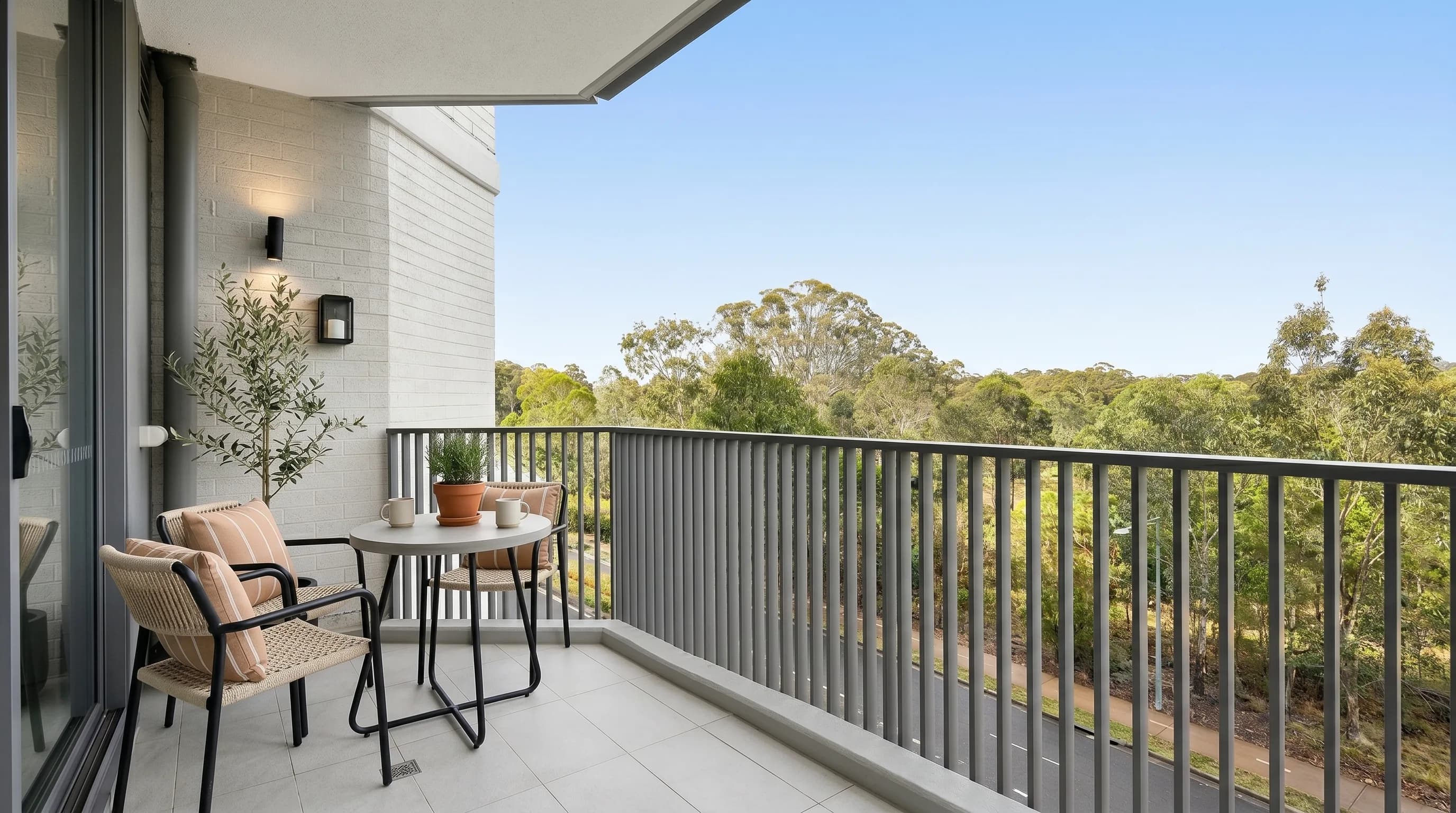
The drone vs AI exterior shots question lands in my inbox most weeks. An agent has a listing. They want the building to look cinematic from the air, or at least from the street. And they are trying to work out one thing. Should they book a drone pilot, or have the exterior rendered by AI instead? It is a fair question. Both can open a property film with a wide, confident shot. But they solve different problems. They cost different amounts. And they carry very different rules about what you are even allowed to show.
I run Oracreative, a small Sydney studio. I have spent about three years making video. It started broad, then homes pulled me in. Now I build property films with AI. Every piece in my portfolio is something I made myself, start to finish. I am not going to pretend I have shot a thousand listings. I have not. My first real property job was unpaid. An agent asked me to film an apartment. I said yes, but only once the developer had signed off on the renders and their copyright. When that approval came, I made the film for free, to learn. So I have stood on both sides of this fence. Here is how I actually choose.
What a drone shot actually gives you
A drone shot is a photograph of a real place. That sounds obvious. It is also the whole point. The building is there. The street is there. The neighbour's roofline, the gum trees, the afternoon light, all real. A buyer trusts that. They know a camera cannot invent a park across the road.
For a finished home, that trust is worth a lot. Aerials show the block shape. They show how the house sits on its land. They show the drive to the beach, or the train line two streets back. None of that can be faked without someone noticing.
But a drone has hard limits. The building must exist. You cannot fly a tower that is still a hole in the ground. You need weather. Grey Sydney days flatten everything. You need a licensed operator for most paid commercial work, and you need airspace that allows it. Near an airport or over a crowd, the answer is often no. And you get the site as it is on the day. Scaffolding, a skip bin, a brown lawn. The camera is honest, even when honesty is unflattering.
There is also the season problem. A garden that shines in October can look tired in July. A drone captures the day you booked, not the day the home looks its best. You can wait for a better window, but waiting costs weeks. On a live campaign, weeks are the one thing nobody has spare.
What AI exterior shots actually give you
AI exterior shots start from information, not from a live scene. I feed a model the plans, the architect's renders, the material board, and reference photos. It builds moving footage from that. A facade at golden hour. A slow push toward the entry. A camera that lifts to reveal the roofline. All of it generated, none of it flown.
The upside is freedom. I am not waiting for a sunny Tuesday. I am not waiting for the build to finish. For an off-the-plan tower, this is the only way to show an exterior at all, because there is nothing to point a camera at yet. This is the core of the AI property video work I do for Sydney developments.
The catch is honesty. An AI exterior is an interpretation. It shows the building as designed, or as I direct it. It does not show the skip bin, and it does not show the half-built one next door. That can be a feature. It can also mislead, if you let it. So the rule I keep is simple. The render must match the approved plans, and nothing it shows can be a promise the developer has not made.
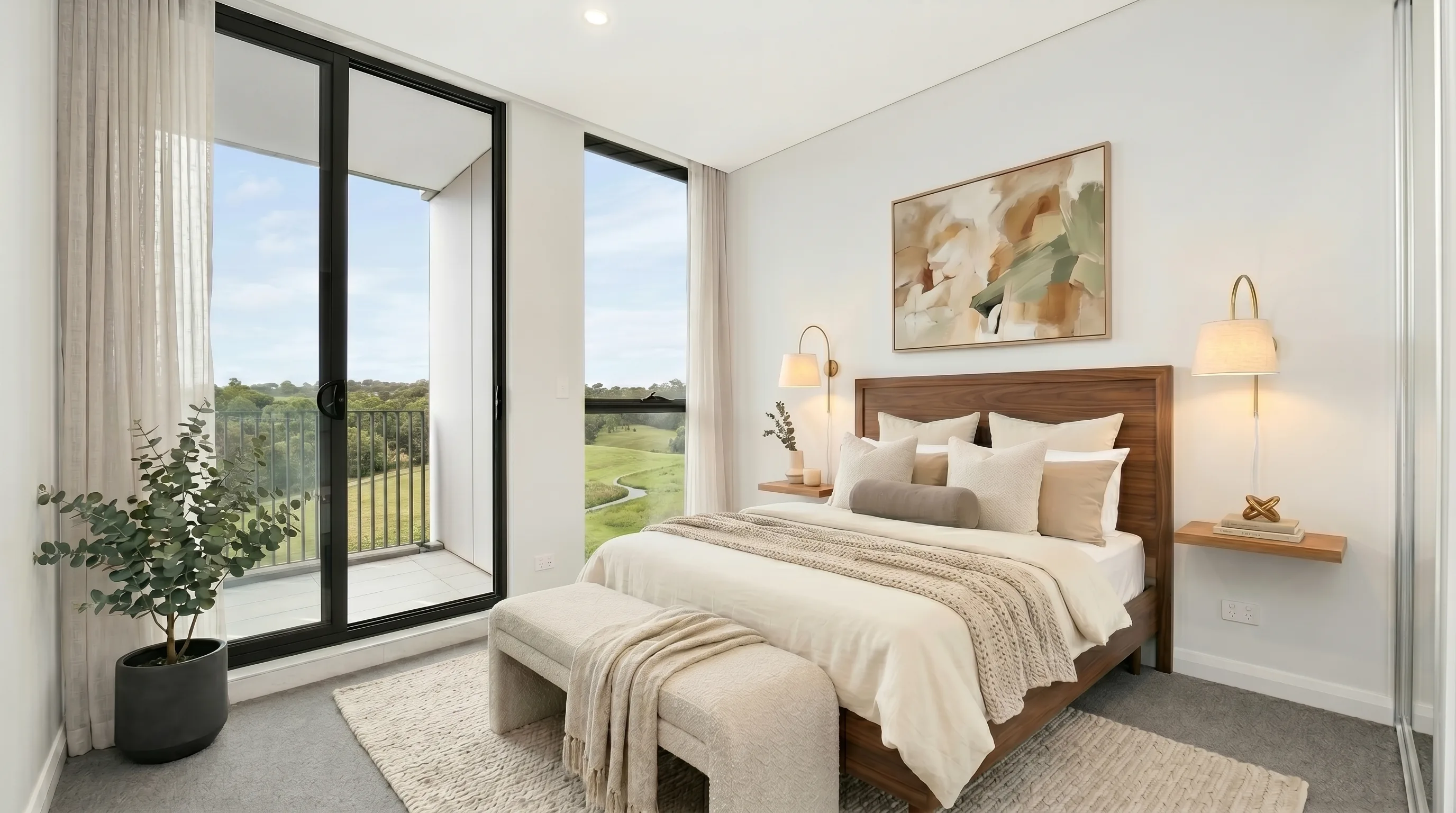
Drone vs AI exterior shots, side by side
Here is the trade-off in one place. I built this table from what each method can and cannot do, not from a brochure. Read it as a set of leanings, not laws. Every listing bends the numbers a little.
| Factor | Drone footage | AI exterior shots |
|---|---|---|
| Needs the building to exist | Yes, fully | No, plans are enough |
| Typical turnaround | Days, plus a weather window | Hours to a couple of days |
| Weather and time of day | Fixed to the shoot day | Any hour, any season, chosen |
| Literal accuracy | Exact, it is a real photo | Interpreted from the design |
| Rights and permissions | Pilot licence, airspace rules | Render copyright from the owner |
| Rough cost | Higher, crew and travel | Lower, no shoot |
| Best for | Finished, real, sold-as-seen homes | Off-the-plan and empty stock |
So the honest drone vs AI exterior shots answer is not a winner. It is a question back to you. Does the thing exist yet, and does the buyer need to trust the literal frame? If yes, fly it. If the building is a future promise, or the day is grey and the deadline is Friday, render it.
If you are weighing this up for a real listing, I would rather show you than tell you. Start a free pilot → and I will render your building's exterior so you can hold it against a drone quote before you spend a cent.
When a drone is the right answer
To be clear about my side of it: I do not fly. When a listing needs a real aerial, that is a drone operator’s job — I work with footage you already have, or you commission it separately. What I make is the generated half.
A drone is the right call when the property is finished and the setting is the selling point. A headland home with water on three sides. An acreage where the whole story is the land. A house whose value is the quiet street it sits on. In those cases, a buyer wants proof, and only a real aerial gives it.
A drone also helps when trust is fragile. Prestige buyers are careful. They have seen renders that flatter. A real flight over a real roof settles nerves in a way a generated frame cannot. The big portals reward this too. A strong hero aerial performs on realestate.com.au, where the first image does most of the click-through work.
And a drone is the only honest option when the surroundings cannot be faked responsibly. If the pitch is "walk to the ferry", I want the ferry in shot, for real. A render of a ferry that may or may not be a five-minute walk is the kind of thing that gets an agent in trouble. Honesty is cheaper than a complaint.
One more case pushes me toward a drone. Repeat business. When an agent lists in the same suburb often, real aerials build a library they can reuse and trust. That footage keeps working across many campaigns. It is an asset, not a one-off cost, and over a year it quietly pays for itself.
When I reach for AI
I reach for AI first on anything off-the-plan. There is no building to fly, so the choice makes itself. The exterior has to be built from the design, and AI does that faster and cheaper than a traditional archviz house. I wrote a fuller breakdown of the whole format in my guide to the real estate listing video, if you want the full picture.
I also reach for AI when speed rules. A launch is next week. The renders exist, but no footage does. I can turn a directed exterior sequence around in a day. A drone booking plus a weather window can take longer than the whole campaign allows.
And I reach for AI when the real site would hurt the sale. A finished building on a cluttered handover day looks worse than it is. If the developer approves it, a clean render of the approved design is fairer to the actual product than a photo of a bin day. That is a judgement call, and I only make it with sign-off. You can see how I frame these choices across my self-made portfolio.
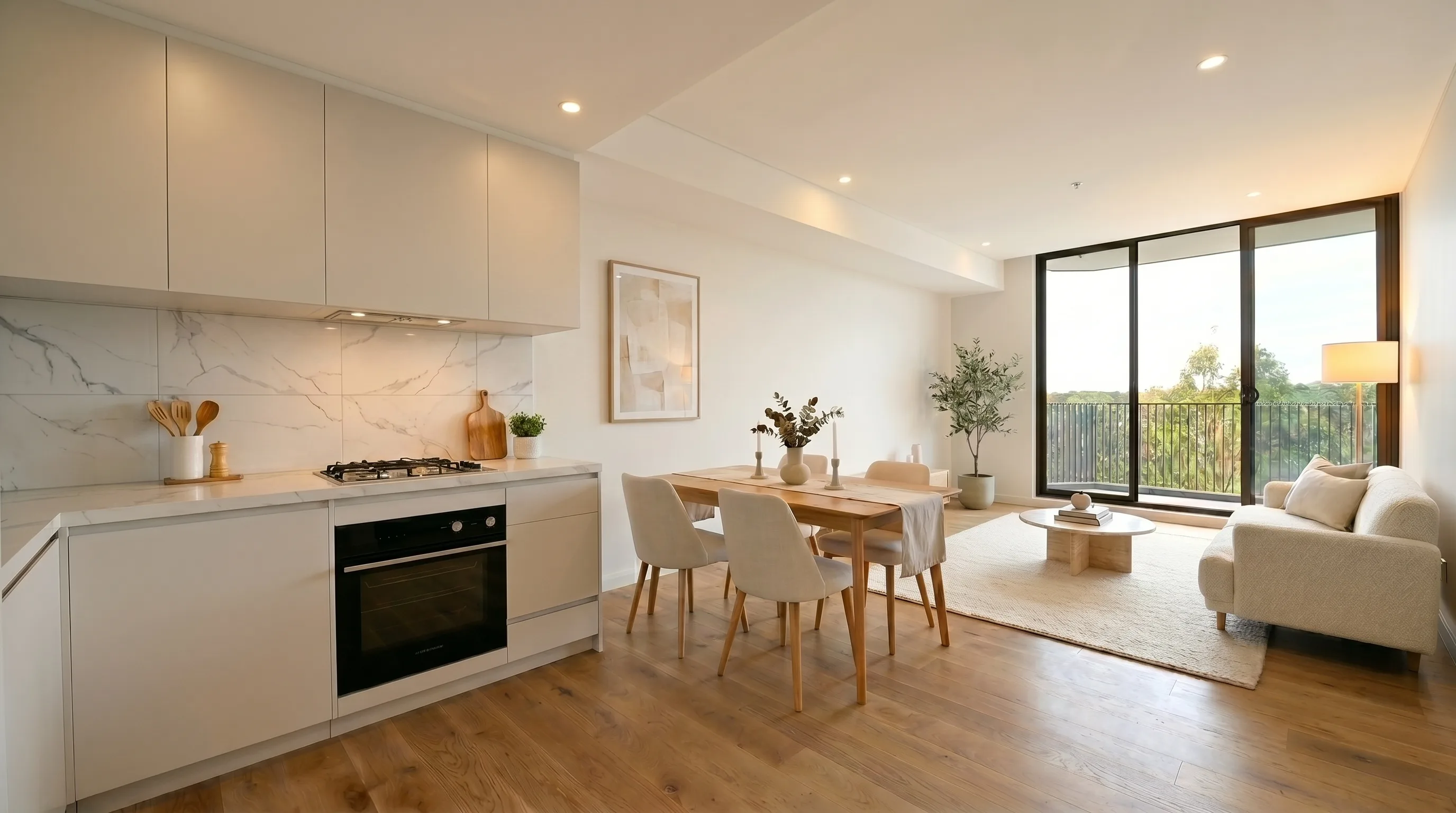
A cost reality check for a Sydney listing
Money drives most of these calls, so let me be plain about it. A drone shoot is not just the flight. It is the licensed pilot, the travel, the booking risk, and the reshoot if the weather turns. On a suburban listing, that adds up quickly. On an acreage or a waterfront, it is usually worth every dollar, because the land is the product.
An AI exterior sequence carries none of that shoot overhead. The cost sits in the craft time. Directing the camera moves, matching the light to the plans, grading the result so it reads as one piece. That work is real, and I charge for it. But there is no crew standing around waiting for a cloud to pass. So for a fast launch on a tight budget, the maths tends to favour a render.
There is a hidden cost too, and it is worth naming. A cheap drone clip that looks flat can quietly cost you clicks. A rushed AI render that looks fake can cost you trust. Neither tool saves you if the output is careless. The real spend, in both paths, is the attention to detail that makes the frame worth pausing on.
What a buyer feels in the first few seconds
A listing video gets judged fast. The first frame either earns the next three seconds, or it loses them. This is where the drone vs ai exterior shots decision quietly matters most, because the opening shot sets the tone for everything after it.
A real aerial says "this is a genuine place, and it is worth your time". It reads as reportage. A rendered exterior says "this is the vision, and here is how good it will be". It reads as aspiration. Neither is wrong. But they prime the viewer differently, and a good film knows which promise it is making.
My rule of thumb is about expectation. If the buyer will walk the real site next week, I do not want the film to overshoot reality. That sets up a letdown. If the buyer is choosing off a plan, aspiration is honest, because the finished building genuinely will look like the approved design. Match the opening frame to the truth the buyer is about to meet.
How the two combine
A listing film does not have to be one or the other. It can be both. A real drone establisher to earn trust, then AI interiors and detail shots to carry the story. Or an AI exterior for a future tower, cut against real drone footage of the actual neighbourhood, so the location is true even when the building is not built.
The seam is where the craft lives. If the light does not match, the cut jars, and the viewer feels lied to without knowing why. So I grade them to agree. The AI frames borrow the drone's colour and haze. The real frames get a touch of the render's polish. Done well, a buyer never files it as "real" or "fake". They just feel the place.
The other blend is data. Buyers on domain.com.au scroll fast. A film that opens real, then flows into a rendered interior, holds them longer than either alone. The real frame buys credibility. The rendered frame buys polish. Together they buy attention.
I plan the blend before I make a single frame. I mark which shots must be true, which can be interpreted, and where the cut between them will fall. That map keeps me honest. It stops a render sneaking into a spot where the buyer really needed a fact. And it keeps the film from feeling like two different videos stitched together at the last minute.
Where AI exterior shots have limits
I would rather tell you the weak spots than have you find them mid-campaign. AI exterior shots still struggle with a few things, and pretending otherwise would be a bad way to earn your trust.
Fine repeated geometry can drift. Long runs of identical balustrades, brick courses, or window mullions sometimes wobble under close inspection. On a wide hero shot you never notice. On a slow, tight push, you might. So I direct around it, and I keep the risky moves short.
Reflections and glass can misbehave too. A rendered window might mirror something that is not really there. I check every frame for those small tells, because one wrong reflection can pull a viewer out of the film. It is slow work, and it is the part most people skip. Skipping it is exactly why some AI property clips look cheap.
Exact context is the bigger honesty limit. AI can render your building beautifully. It cannot know the real tree that will actually stand on the verge, or the exact colour of next door. If a buyer will make a decision based on the literal surroundings, that part wants a real camera, or a very careful disclaimer. And there is the rights question, which I treat as non-negotiable. I do not render a building's exterior for public marketing until the owner of the design has approved it. That single rule has cost me jobs. I still keep it, because the alternative is worse.
Frequently asked questions
- Are AI exterior shots cheaper than hiring a drone?
- Usually, yes. There is no crew, no travel, and no weather window to pay for. The saving is biggest on off-the-plan work, where a drone cannot fly the building at all because it does not exist yet.
- Do buyers trust an AI exterior as much as a real drone shot?
- Not quite, and they should not. A drone frame is a real photo of a real place. An AI exterior is an interpretation of the approved design. Both are useful, but I only use a render when it honestly matches the plans.
- Can I mix drone footage and AI exterior shots in one video?
- That is often the best result. A real aerial earns trust up front, then AI carries interiors and future views. The key is grading both so the light matches, otherwise the cut between them feels off.
- Who owns the rights to an AI-rendered building exterior?
- The design belongs to the developer or architect, so I do not generate a building's exterior for public marketing until they approve it. My first pilot was free precisely because I waited for that sign-off before I made anything.
- Which should I choose for an off-the-plan Sydney launch?
- AI, in almost every case. There is nothing to fly, the renders already exist, and a directed exterior sequence can be ready in a day. A drone becomes useful later, once the building is real and finished.
Planning a property video?
We run a free pilot for a small number of Sydney developers and agencies each month — one property, one finished AI-powered video, no cost.