Listing video · 13 Sept 2026
Property Video for Social Media: A Sydney Studio Guide
Oracreative · Updated 19 Aug 2026
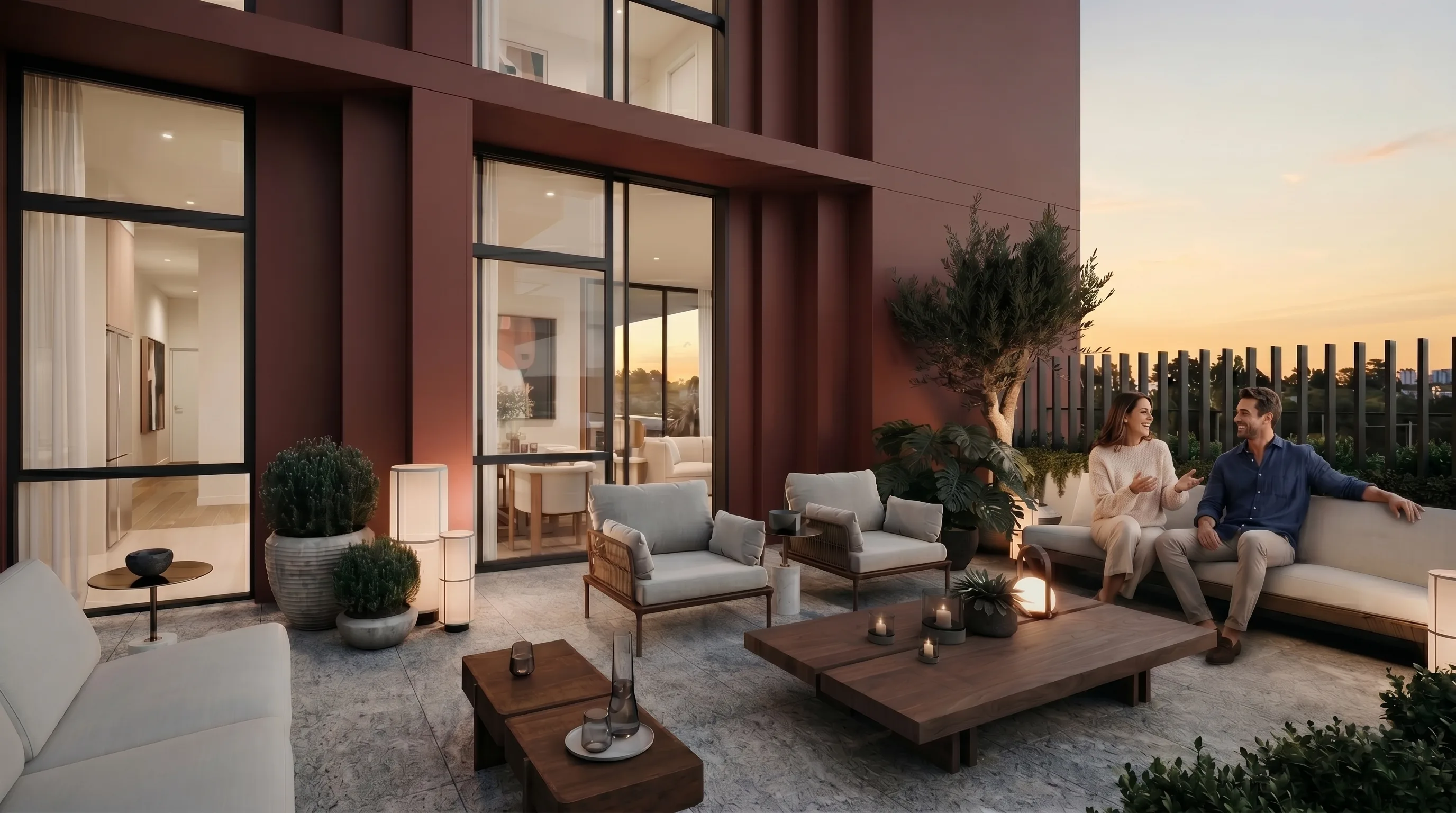
Most agents post a property video for social media as an afterthought. A quick pan of the kitchen, a caption, and done. Then they wonder why it sank in the feed. The scroll is brutal. You get about a second to earn the next one. A film built for the feed is a different animal from a film built for a portal. It has to hook fast, read on mute, and feel native to the platform. Get that wrong and even a beautiful home disappears.
I have spent about three years making video. Homes pulled me in early, so property became the focus. I run Oracreative, a Sydney studio, and I build these films with AI. Every piece in my portfolio is my own work, made start to finish. I have no long client list to wave around. So I will just be honest here: what works on social, what does not, and how I would approach your first cut. This guide is the version I wish someone had handed me.
Why a property video for social media wins the scroll
Buyers do not start on a portal anymore. They start on their phone, half-watching, thumb moving. A portal listing on realestate.com.au or Domain catches people who are already searching. Social reaches them earlier, before they have decided to look. That is the real prize. You get in front of a buyer who did not know your listing existed yet.
Video does this better than photos. Motion stops the thumb. A slow push down a hallway, a balcony reveal, a kitchen that catches the afternoon light. These hold attention in a way a photo carousel cannot. And the platforms reward it. A strong reel gets pushed to people who do not follow the agent yet. That reach costs nothing, and it compounds over a campaign.
There is a listing benefit too. A property with a good social cut feels more alive than one with ten static photos. It signals effort and care. Sellers notice that. So the video does double duty. It markets the home today, and it markets the agent to the next vendor tomorrow. Both matter in a market this competitive.
Reach is only half of it. Social also lets a buyer share. A parent sends a listing to a partner. A friend tags someone who is looking to move. That quiet, private sharing is where a lot of real enquiry begins. A scroll-stopping video is what makes someone press send. A static gallery rarely gets forwarded the same way.
What makes a social film different from a listing film
People assume a social video is just a shorter listing video. It is not. It is framed, paced, and edited for a different place. Get the frame wrong and it dies, no matter how nice the house is. So the differences are worth learning before you build a single second.
Start with orientation. Social is vertical. A wide landscape shot shrinks to a thin letterbox strip on a phone and loses all its power. I frame for a tall nine-by-sixteen screen from the first frame. I do not crop a wide one down later and hope. The tall frame changes how you compose every room.
Then sound. Most people watch on mute. So the video has to make sense with no audio at all. Text on screen carries the message. Music is a bonus, not the spine. If a video only works with the sound on, it does not really work. I edit every social cut with the volume down and check that it still reads.
Length is the last one. A feed reel lives or dies in fifteen to thirty seconds. There is no room for a slow intro or an agent to-camera preamble. You cut to the best moment and you keep moving. It is closer to a trailer than a tour. Every second has to justify its place.
One more difference is rhythm. A listing film can breathe. A social cut cannot. The energy has to stay up, the cuts have to keep arriving, and any dead moment loses the viewer for good. I edit social to a tighter clock than anything I make for a portal or a display suite.

Reels, stories, and feed: matching the cut to the slot
Not every social slot wants the same video. A reel, a story, and a feed post each behave differently. The smart move is to cut one production several ways, each tuned to its home. You film or build once, then edit for each surface.
A reel is your reach engine. It goes to strangers, so the hook has to be strong and the pace quick. A story is intimate and disappears in a day, so it suits raw, behind-the-scenes moments or a fast "just listed" shout. An in-feed post lives on your profile grid, so it should look polished and on-brand. A longer cross-post carries the full walkthrough for people who click through. The table below lines them up.
| Format | Best length | Main job | Tone |
|---|---|---|---|
| Reel | 15–30 seconds | Reach new buyers | Punchy, hook-first |
| Story | 5–15 seconds per frame | Warm up followers | Raw, casual, urgent |
| Feed post | 30–60 seconds | Anchor the profile | Polished, on-brand |
| Portal cross-post | 60–90 seconds | Inform active searchers | Complete walkthrough |
Aspect ratio is the trap most people fall into. A square feed post and a full-screen vertical reel are not the same crop. A shot composed for one can look awkward in the other. So I frame with the tightest ratio in mind, then give the wider slots a little more room. It keeps every version looking intentional rather than stretched.
One set of photographs feeds all four. You plan the outputs first, then capture with each in mind. That costs nothing extra. And it multiplies where a single piece of work can travel. Most agents leave that reach on the table by cutting for one slot only.
How I make one, from listing to reel
The workflow is more grounded than "AI video" makes it sound. For a finished home, I start with what exists: photos, a walkthrough, drone footage if there is any. For an off-the-plan or empty property, I build the interiors with AI from plans and renders. Either way, the craft I bring is the same AI property video process I use for full listings.
Next I choose the hero moment. Every listing has one. The view, the kitchen island, the light at a certain hour. That becomes the first shot. I build the reel outward from it. The order is deliberate: a hook, three or four strong beats, then a clear end card with the agent and the address. Nothing is there by accident.
Then the edit. This is where the time goes. Pacing, text timing, the cut landing on the beat, the colour grade. A social cut is short, but it is not quick to make well. The gap between a reel that gets scrolled past and one that gets saved sits in these small decisions. That is the part a buyer feels without naming it.
Last, the exports. I deliver the reel, a story set, and a feed version in one pass. Each is sized correctly, with captions baked in where they help. You post, rather than fiddle with re-cropping. The whole point is to make it easy to be consistent.
Want to see it on your own listing? Start a free pilot → — one property, one finished social cut, no cost.
Planning the first three seconds
The first three seconds are the whole game. If the opening frame does not earn a pause, nothing after it matters. So I spend a disproportionate amount of planning on the hook. Everything else in the cut is downstream of that one decision.
A few things reliably work. A striking room, shown immediately, with no build-up. A bold line of text that names the draw, like "Harbour views from every room." A motion that resolves, such as a door opening onto a reveal. The worst opening is a slow logo sting or a wide establishing shot. That is a portal habit, and it quietly kills a reel.
The hook also depends on the property type. A finished home can lead with its best real room. An off-the-plan listing has no finished room to show, so the hook has to sell a feeling from renders. The main film those cuts come from is covered in my guide to the real estate listing video. The principle holds either way. Open on the strongest thing you have.
Test it with the sound off and at arm's length. If it does not grab you on mute, on a small screen, it will not grab a stranger mid-scroll. I run that check on every hook before I build the rest of the cut. It saves a lot of wasted editing.
I also plan the end, not just the start. A reel that simply stops feels cheap. A clean end card with the agent's name, the address, and one call to action gives the viewer somewhere to go. It is a small thing that turns a passive view into an actual enquiry.

Where a property video for social media falls short
An honest guide names the trade-offs. Social video is powerful, but it is not a cure-all. It will not fix a weak property. If a home is poorly presented or wrongly priced, a good reel just gets the wrong people to the door faster. The video amplifies. It does not repair.
It is also not a full listing film. A reel earns attention, then hands the buyer off. They still want the complete walkthrough, the floor plan, and the detail. Social sits at the top of the funnel, not across the whole thing. Treat it as the hook, with the portal listing as the follow-through. The two work together or not at all.
There is a consistency cost too. Social rewards volume. One brilliant reel a quarter will not build an audience. The agents who win here post steadily, and that takes real time or a system to produce it. I am honest about that up front when someone expects a single video to change everything overnight.
You can judge the quality question for yourself. Every piece in the work I have made is my own, produced end to end. So you can see the bar for yourself before you commit to anything.
How to brief your first social video
You need less than you might expect. To start, gather a few simple things:
- the listing address and the one feature you would lead with;
- any existing photos, video, or drone footage;
- the platforms you post on, and which one matters most;
- a reel or two you admire, so we share a reference;
- your agent branding: logo, colours, and the end-card details.
The lead feature matters most. Name the single thing that makes the home worth a stranger's attention. That one decision shapes the hook and the whole cut. Everything else in the edit supports it. Vague briefs produce vague videos, every time.
Decide where it will run before we build. A reel-first plan looks different from a story-first one. And name one person to give consolidated feedback. A committee of notes is the fastest way to blow a simple timeline. One clear voice keeps the cut sharp.
Timing helps too. The best moment to brief a social cut is the same week the listing goes live, not two weeks after. Fresh stock gets the most reach, so the video should be ready to post on day one. A little lead time on the brief buys that head start.
What you do not need is a big budget or a finished, styled home. For empty or off-the-plan stock, I can build the interior from plans. For a finished listing, the existing assets are usually enough to start. The barrier to a first attempt is lower than most agents assume.
Getting more from one production
The agents who win treat a single video as a campaign, not a one-off post. One production can be released in a planned sequence. Done well, it keeps a listing alive in the feed for weeks rather than a single afternoon.
Start with a teaser before the first open home. A five-second hint that builds curiosity. Then the hero reel on launch day, the strongest cut, pushed hard for reach. Follow with a story set during the campaign: an open-home clip, a price update, a "still available" nudge. Each keeps the listing visible without any new filming.
The same footage pairs with the rest of the kit, too. The look carries into the portal listing, the email to the database, and the agent's profile grid. The brand feels consistent from the first scroll to the contract. That coherence quietly builds trust with a vendor.
Reuse is the quiet win here. A cut that performed well on one listing becomes a template for the next. The hook style, the pacing, and the end card can carry across, so each new video takes less time than the last. Over a year, that compounding is what separates a busy agent from an invisible one.
Measure what you can. A simple link in the bio for each listing shows which cut drives enquiry. Over a few campaigns, that tells you where to spend effort next time. One property video for social media, released with intent, does far more than a single clip posted once and forgotten.
Frequently asked questions
- What is a property video for social media?
- It is a short, vertical film of a listing made for platforms like Instagram, TikTok, and Facebook. It is hook-first, works on mute with on-screen text, and usually runs fifteen to thirty seconds. It is edited for the feed, not adapted from a portal walkthrough.
- How long should a social property video be?
- For a reel, fifteen to thirty seconds is the sweet spot. Stories can be even shorter per frame. A profile feed post can stretch to a minute. If you cross-post a full walkthrough, sixty to ninety seconds is reasonable for people who click through to learn more.
- Do I need to film the home, or can it be built with AI?
- You do not need a shoot from me — I do not film. For a finished home I build the reel with AI from the photos you already have, plus any video or drone footage if it exists. For empty or off-the-plan stock I build the interiors from the plans and renders. The editing craft that makes a reel land is the same either way.
- Who owns the copyright to renders and footage used in the video?
- For off-the-plan work, the developer usually owns the source renders and photography. Before I make a film I ask for the developer's approval to use them. I once turned a job down until that sign-off was in place. It protects the developer, the agent, and the buyer.
- Will a social video replace my portal listing?
- No. Social earns attention at the top of the funnel, then hands the buyer to the full listing. They still want the complete walkthrough, the floor plan, and the detail on the portal. The two work together: the reel hooks, the listing informs and converts.
Planning a property video?
We run a free pilot for a small number of Sydney developers and agencies each month — one property, one finished AI-powered video, no cost.