AI visualisation · 21 Aug 2026
AI Architectural Visualisation, Explained for Developers
Oracreative · Updated 23 Aug 2026
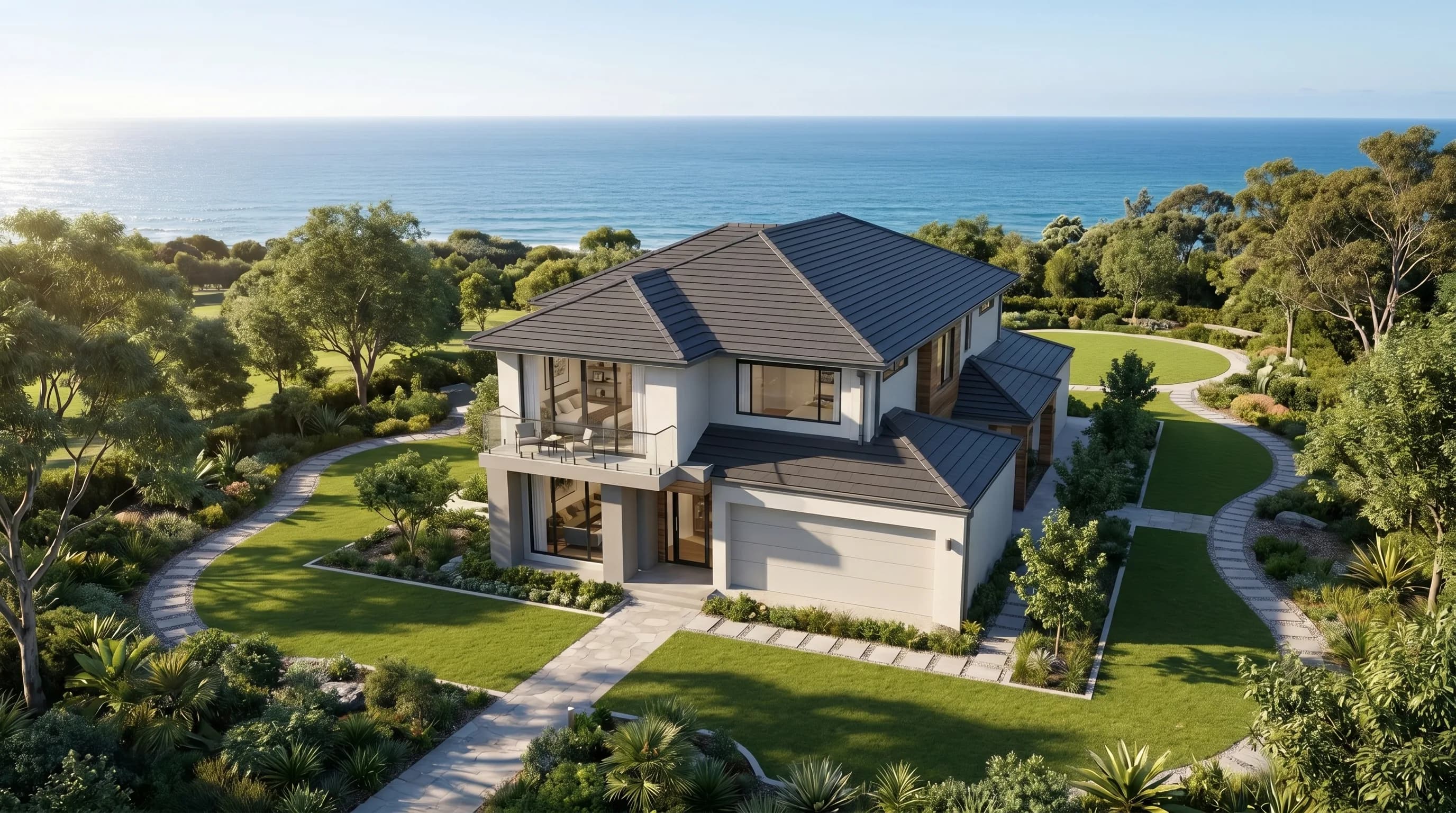
If you sell homes before they exist, your marketing lives or dies on how real the renders feel. AI architectural visualisation is the fastest way I have found to make an unbuilt building feel real. It turns floor plans, elevations, and design intent into images and film that a buyer can actually feel, months before the first slab is poured. This is the long version: what it is, how it works, what it costs, and where it still falls short.
I have spent about three years making video. I started with all sorts of subjects, then homes pulled me in and I never really left. These days I build this work with AI, and I run Oracreative, a small Sydney studio. Every piece in my portfolio I made myself. My first property job came from an agent who asked for an apartment film. I said yes on one condition: I would not touch the renders until the developer signed off on the copyright. Once they approved, I made the film for free. That order, permission first, still shapes how I work.
What AI architectural visualisation actually is
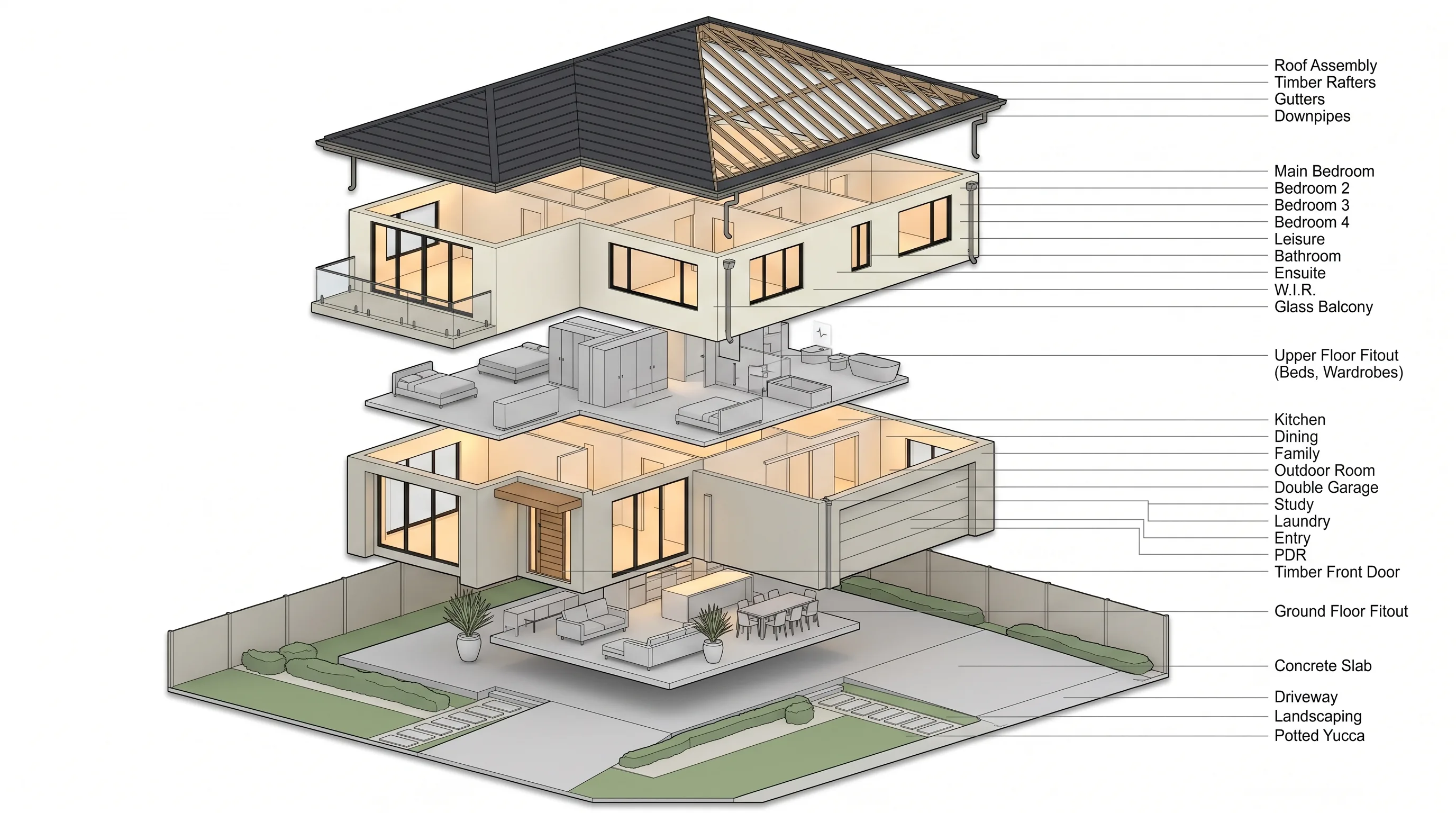
AI architectural visualisation is the craft of picturing a building before it is built, using AI models to do the heavy lifting. Traditional archviz has existed for decades. A studio models the geometry in 3D, sets lights and materials, then renders each frame. It is precise and it is slow. The AI version keeps the goal and changes the engine. Instead of hand-placing every polygon, you guide a model with plans, reference images, and words. The model fills in light, texture, and depth.
The point is not to replace an architect's intent. The point is to show it. A design sits in drawings and a schedule of finishes. Most buyers cannot read those. They read pictures. So the job is translation. You take the technical truth of a scheme and turn it into something a person can stand inside with their eyes.
People often mix up three outputs. A still is one frozen image. A film is a sequence with pacing, light, and sound. A walkthrough is an interactive path through geometry. AI touches all three. But the discipline underneath is the same: represent a real design faithfully, and make it feel like a place rather than a diagram.
It also sits next to, not on top of, the render packs a developer already commissions. Those static renders are usually built for planning and hoardings. This work reuses that design truth and gives it motion and mood for the sales campaign.
How AI architectural visualisation actually works
Here is the honest version of my process. It is less magic than the demos suggest, and more editing than generating.
First, inputs. I gather everything that describes the building. Floor plans, elevations, sections, material boards, and any approved renders. The more constrained the design, the better. A vague brief gives you a pretty building that is not the building being sold. That is a trap.
Second, blocking. I establish the massing and the key views. Where does the eye enter the frame? What does the facade read like at street level? Where does the light come from at the time of day the marketing wants? This stage is closer to cinematography than to software.
Third, generation and correction. The model produces frames. Most are wrong in small ways. A window is the wrong proportion. A benchtop reads as the wrong stone. I correct, re-guide, and regenerate. This loop is most of the work. The skill is not in the first image. It is in catching the twenty details that would tell a buyer the picture is fake.
Fourth, assembly. Stills become a film. I add camera motion, grade the colour, and score it with sound. A room only feels lived-in when the light moves and you hear the space. That last ten percent is what separates a marketing asset from a tech demo.
None of these stages is a single button. People see one clean output and assume the tool did it in a breath. What they do not see is the discard pile. For every frame that ships, I throw away many that were close but wrong. That editing eye is the actual craft. The model is a fast intern with no judgement. The judgement is still mine, and it is what a buyer is really paying for.
Underneath all of it is a rule I do not break. Every corrected detail moves the image toward the approved design, never away from it. If a change makes the frame prettier but less true, it does not ship. The whole value of this work is that a buyer can trust what they see. This is the same discipline I bring to finished-property work through my AI property video service.
That is the compressed version. If you want to see how each stage plays out on a real project, from the developer's drawings to the finished film, I unpack the whole pipeline in a separate step-by-step guide.
Where it fits in a development's marketing
The strongest use is the launch window. That is the gap between a development being approved and being built. Deposits are taken during that gap. Buyers commit to a home they cannot walk through. Anything that makes the home feel real earns its keep here.
Most buyers in Australia start on the big portals. They scroll realestate.com.au and Domain on a phone, at speed. A static render is easy to scroll past. A short film with motion and sound holds the thumb a beat longer. That beat is where interest starts.
It also solves distance. Off-the-plan stock often sells to interstate and overseas buyers who cannot visit. A film lets them tour the home from anywhere. For pre-construction specifically, this pairs closely with an off the plan property video, which is the film-first sibling to this more render-led craft.
And it stretches one design investment across a whole campaign. From one modelled scheme you can pull a hero film, social cutdowns, portal stills, and display-suite loops. The design work is done once. The outputs are many.
There is a timing point worth stressing. The launch window is short and it does not come back. Miss it, and you are marketing leftover stock into a colder market. So speed is not a vanity metric here. A film that arrives two weeks after launch has already missed the buyers who committed on day one. The value of a fast pipeline is that it can keep pace with the sales calendar, not lag behind it.
Thinking about the launch campaign for an unbuilt scheme? I run early no-cost pilots so you can see the quality on your own project before spending anything. Start a free pilot →
Still, render pack, or film: what to use when
These outputs are not rivals. They do different jobs at different moments. Here is how I decide, in plain terms.
| Output | Best for | Strength | Limitation |
|---|---|---|---|
| Static render | Planning, hoardings, portal thumbnails | Cheap to reuse, high per-frame detail | Frozen, easy to scroll past |
| Interactive walkthrough | Display suites, self-guided exploration | Buyer controls the path | Needs effort from the viewer; less emotional |
| AI-led film | Launch campaigns, social, hero reels | Motion, light, and sound carry feeling | Directed, so it shows only chosen angles |
| Full traditional CGI | Flagship towers with big budgets | Total control of every pixel | Slow and expensive; weeks, not days |
For most mid-size Sydney developments, a mix wins. Keep the static render pack for planning and portals. Add an AI-led film for the launch. Reserve full CGI for the rare flagship where the budget and timeline justify it.
What it costs and how long it takes
I will be straight, because I am new to the business and have no interest in dressing up a rate card. Traditional archviz is priced per frame and per revision, and a full film can run into the tens of thousands and take many weeks. That model is built for large firms with long lead times.
The AI approach changes the shape of the cost. There is no render farm and no crew. Most of the price is my time in the correction loop. So a short film that would once have taken weeks can land in one to two weeks. The saving is real, but it is not infinite. Quality still costs attention. A rushed film looks rushed.
What drives the number up is complexity. Many rooms, many finishes, many camera moves. What keeps it down is a tight brief and a design that is already locked. If the scheme is still changing, expect more loops and a higher cost. You are paying for certainty, so bring certainty to the table.
Because I am building a body of work, I still take on early pilots at no cost for the right project. You can judge the standard for yourself in my portfolio, where every piece is something I made from the ground up.
How I keep the work honest and cleared for rights
This is the part most tool demos skip, and it is the part that matters most on real projects. Two things can go wrong. The image can lie about the building. Or the image can use design work you do not have the right to use.
On accuracy, my rule is simple. Rooms match the dimensions being sold. Views reflect the true aspect. Finishes match the schedule. A film that oversells the light or widens a room is not marketing. It is a future complaint. Accurate work protects the buyer and the developer at once.
On rights, I do not start until ownership is clear. My first job taught me this. An agent wanted a film, but the renders and the design belonged to the developer. So I waited until the developer approved the copyright, then made the film for free. I never name that agent or that developer, and I never reuse a client's design elsewhere. Permission first is not a nicety. It is the floor.
Where AI architectural visualisation has limits
I would rather tell you the weak spots than have you discover them mid-project. AI architectural visualisation is powerful, but it is not a cure-all, and pretending otherwise would be dishonest.
It struggles with fine, specific detail. A signature tap, a bespoke joinery profile, an exact heritage cornice. The model approximates. If a detail is a selling point, it needs manual correction or it will drift.
It is only as accurate as its brief. Feed it a loose reference and it invents. That invention can look great and be wrong. On a legally sensitive off-the-plan sale, wrong is expensive. Constraint is not a limitation here; it is the safety rail.
It is directed, not explorable. A film shows the angles I choose. If a buyer wants to inspect a specific corner, a film cannot answer that. An interactive tour can. Know which question you are trying to answer before you pick the format.
And it does not replace a real inspection of a finished home. Once a building exists, nothing beats standing in it. This work is strongest before that day, when there is nothing yet to stand in.
How to brief a good one
The quality of the output tracks the quality of the brief almost exactly. Here is what I ask for, and what you should hand any studio you hire.
Lock the design first. Give me the approved plans and the final finishes, not a work in progress. Every open question becomes a guess I have to make for you.
Name the hero moments. Tell me the three things a buyer should feel: the view, the kitchen, the morning light. A film cannot shout everything, so it must whisper a few things clearly.
Set the time of day. Golden-hour warmth and crisp midday tell different stories. Pick the one that matches the buyer you want.
Confirm the rights up front. Tell me who owns the design and the renders, so I can clear permission before I start rather than after. That one step removes most of the risk from the whole project.
Do those four things and the work gets easier, faster, and truer. Skip them and you pay for the guessing in revisions.
Why this shift matters now
A year ago I would not have written this article. The tools were not ready. AI interiors looked plastic, faces of buildings warped under close inspection, and light behaved in ways that broke the illusion. On a phone thumbnail it might pass. On a display-suite screen it fell apart.
That has changed fast. Careful work now holds up on a large screen, at a size where a buyer leans in. The gap between a static render and a believable film has closed enough that the film is worth making. That is the real news. Not that AI can make pictures, but that the pictures finally clear the bar a paying buyer sets.
For a developer, the practical takeaway is timing. The technique is new enough that most launches are not using it yet. That is an edge while it lasts. A campaign that feels a step more real than the listing next to it wins attention, and attention is the scarce thing during a launch. I expect this to become standard within a couple of years. Right now it is still a differentiator, and I would rather see honest studios claim that ground than the ones happy to oversell a building.
Frequently asked questions
- What is AI architectural visualisation?
- It is the craft of picturing a building before it is built, using AI models guided by plans, elevations, and reference images. The AI produces photoreal stills and film that let a buyer feel an unbuilt home, faster and more cheaply than traditional frame-by-frame CGI.
- How is it different from traditional 3D renders?
- Traditional archviz hand-models geometry and renders each frame, which is precise but slow and costly. The AI approach guides a model with the same design inputs and fills in light, texture, and depth. The result lands in days rather than weeks, at a lower price, though very specific bespoke details still need manual correction.
- Is it accurate enough for off-the-plan sales?
- It is when it is briefed tightly. Rooms should match the dimensions being sold, views should reflect the true aspect, and finishes should match the schedule. Accuracy is the whole point on a pre-construction sale, so a locked design and a clear brief matter more than the tooling.
- Who owns the renders, and do you need the developer's permission?
- The design and any existing renders usually belong to the developer, not the agent. I do not render a scheme until ownership is clear and the rights holder has approved it. On my first property job I waited for the developer to sign off the copyright before making anything, and I never reuse a client's design elsewhere.
- How much does it cost and how long does it take?
- Most of the cost is the correction loop, not a render farm or a crew, so a short film can land in one to two weeks. Complexity drives the price: many rooms, finishes, and camera moves cost more, while a locked design keeps it down. As a new studio I still take on early no-cost pilots for the right project.
Planning a property video?
We run a free pilot for a small number of Sydney developers and agencies each month — one property, one finished AI-powered video, no cost.