Off-the-plan · 30 July 2026
How I Actually Make an Off the Plan Development Video
Oracreative · Updated 19 Aug 2026
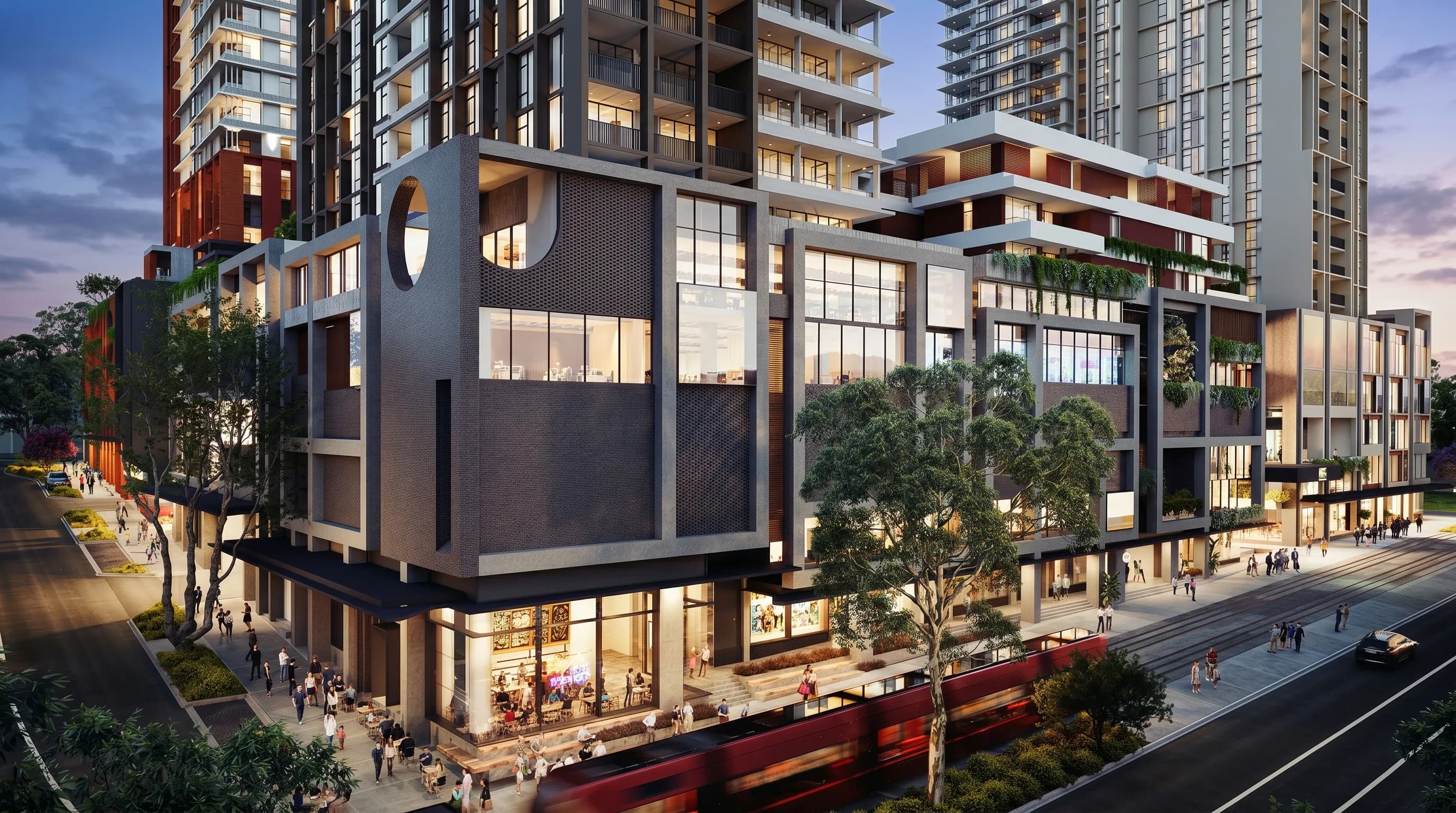
People ask me what goes into a single off the plan development video, and the honest answer is: more decisions than footage. There is no building to film yet. There is a plot of dirt, a set of drawings, and a promise. My job is to turn that promise into something a buyer can feel, without lying about a single square metre. This piece is the behind-the-scenes version of how I actually make one.
I am Oracreative, a small Sydney studio. I have spent about three years making video, and every piece in my portfolio is self-made, start to finish. I am new as a business, not new to the craft. I want to walk you through my real process, from the first drawing to the final grade, and I want to be upfront about where the method still has limits.
What an off-the-plan film really has to do
Off the plan means the apartment is sold before it exists. The buyer signs on the strength of a plan, a price, and their own imagination. That is a lot to ask. A good film closes the gap between the drawing and the feeling of standing in the room.
So the video has two jobs at once. It has to be honest about the space, the light, and the layout. It also has to make someone want to live there. Those two jobs pull against each other, and most of my work is holding the tension between them.
Think about what the buyer is really doing. They are spending months of savings on a room they cannot walk into. They study the floor plan. They count the bedrooms. They try to picture the morning light. A flat brochure render leaves them guessing. A film that moves through the space gives them something closer to memory, and memory is what makes a person commit.
That is the whole reason this format exists. Stills tell you the facts. Motion tells you the feeling. When a buyer can watch the light travel across a benchtop and hear the quiet of a morning, the apartment stops being an abstraction. It becomes a place they can imagine coming home to. My job is to build that feeling without stretching a single truth.
If you want the plain-language overview of the format before the deep process, I wrote a separate off the plan property video guide that covers the basics. This article is the messier, first-person version: what actually happens at my desk.
Buyers rarely watch it in isolation, either. They see the film beside the listing on portals like realestate.com.au, next to the floor plan and the price guide. The video has to survive that context. If it oversells, the drawings right beside it will call the bluff.
The rights conversation comes before the first frame
My studio started with one real request, and it taught me the whole method. An agent asked me to make a short film for an off-the-plan apartment. I said yes to the craft, but not yet. First I had a question: who owns the renders, and can I animate them?
The renders belonged to the developer, not the agent. Animating someone's artwork is a use of that artwork. So I refused to start until the developer approved the copyright for motion use. Once that approval came through, I made the film for free, as an early pilot, to prove the approach.
I know that sounds slow. It is. But rushing that step is how creators end up in a rights dispute over a video nobody can legally publish. Getting a yes in writing first protects the developer, the agent, and me. It is now the first line of every brief I take.
Here is why the ownership question is not a technicality. A render is a piece of commissioned art. Someone paid for it and holds the copyright. Turning that still into a moving film is a new use, and new uses need permission. Agents often assume that because they have the render on their listing, they can hand it to anyone. That is rarely how the paperwork actually reads.
So my first email is boring on purpose. Who created the renders? Who owns them now? Is there written permission to animate them for marketing? If those answers are not clean, I pause. It has cost me speed. It has never once cost me a project I regret taking. Slow paperwork beats a fast lawsuit.
You can see the wider body of self-made work this grew into on my portfolio. None of it invents a client or a result. It is concept and pilot work, framed as exactly that.
How I build an off the plan development video, stage by stage
Every off the plan development video I make moves through the same six stages. I do not skip any of them. Skipping a stage always shows up later as a re-do, and re-dos on a build like this are expensive in time.
The stages are: plans, geometry, look, motion, sound, and revisions. Each one answers a different question. Plans answer "what is true." Geometry answers "where is everything." Look answers "how does it feel." Motion answers "where does the eye go." Sound answers "what is the mood." Revisions answer "did we agree."
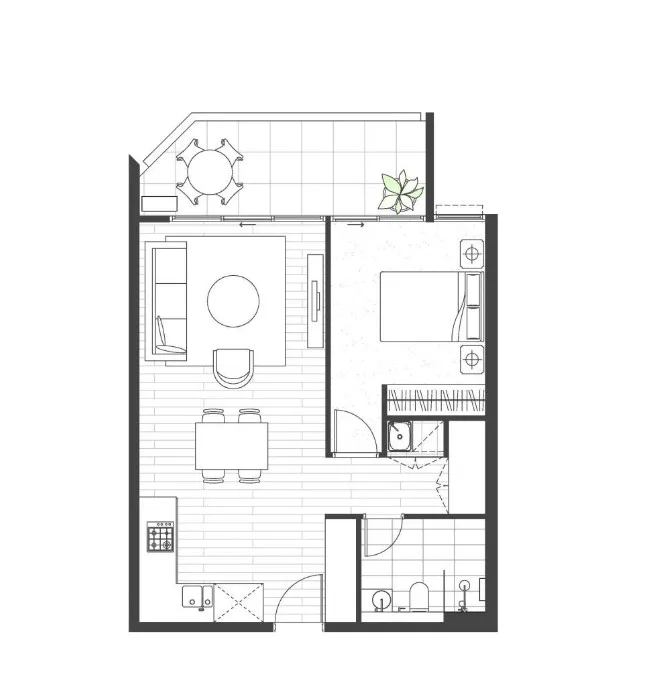
Plans. I start with the floor plan and the elevations. I read the layout the way a buyer will walk it: front door, hallway, the reveal of the living space, the light from the balcony. The drawing is the source of truth for every dimension I honour later.
Geometry. Next I establish the space in three dimensions. Walls, ceiling heights, window lines, and door swings all have to match the plan. This is the least glamorous stage and the most important. If the geometry is wrong, no amount of pretty lighting saves it.
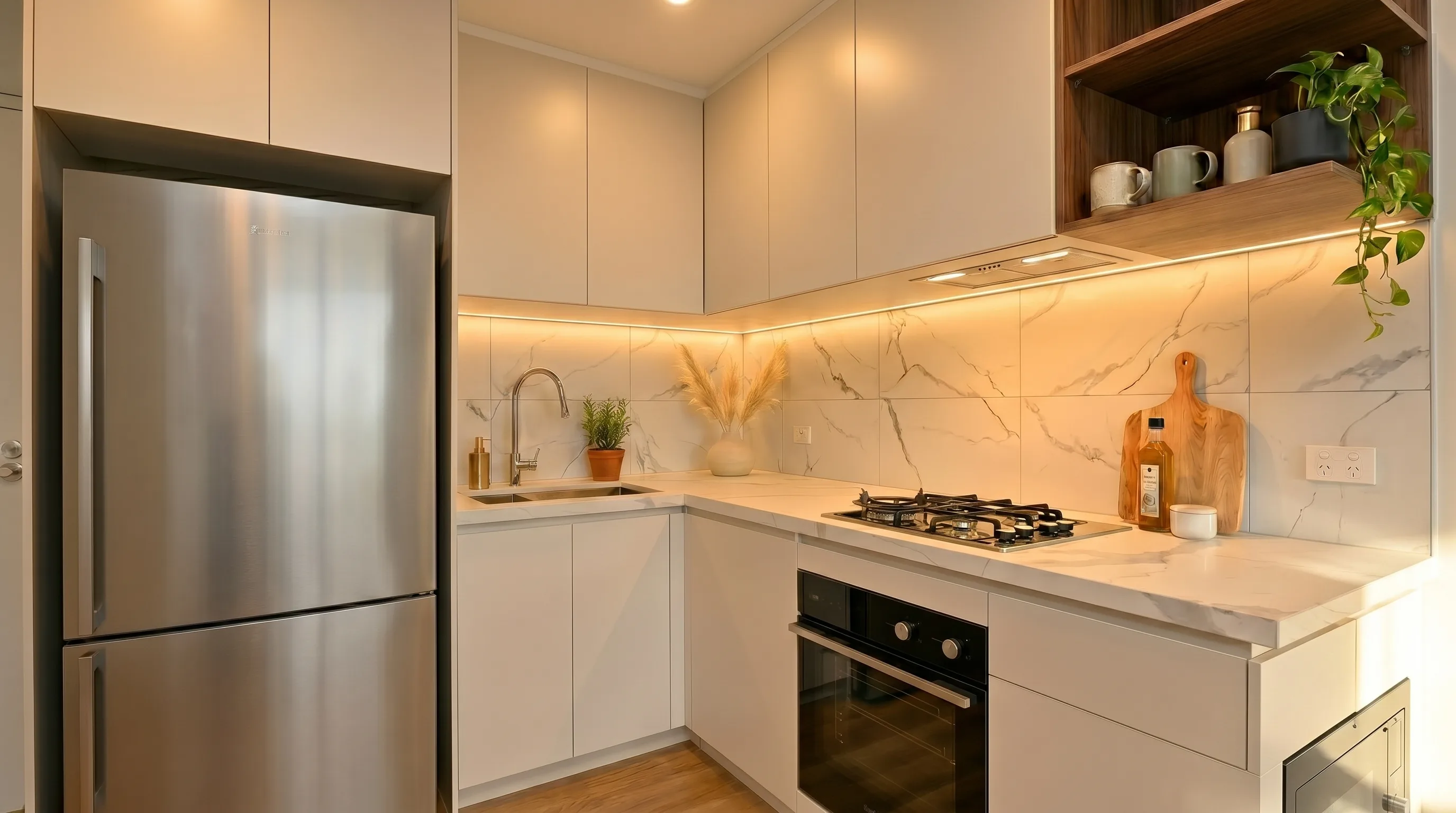
Look. Now the feeling. I choose the light, the materials, and the palette that match the developer's real spec. Warm oak floors, a stone benchtop, morning light off the balcony. I am not inventing finishes here. I am dressing the approved ones.
Motion. Then the camera moves. A slow push through the living room. A gentle rise to show the view. Motion is where a still render becomes a place. I keep moves calm and human, at the pace a person would actually walk.
Sound. Sound does half the emotional work and gets a tenth of the credit. Room tone, a soft score, the quiet of a morning. I build the audio to match the light on screen, so the two never argue.
Revisions. Last, I send it back to the developer and agent. They flag anything that drifts from the real spec. I fix it. We repeat until the film is both honest and beautiful. Only then is it finished.
I want to be clear that these stages are not a straight line. Sometimes the look stage reveals a geometry problem I missed. Sometimes the motion stage shows that a room is too tight for the move I planned. When that happens, I go back. The order matters, but the willingness to revisit an earlier stage matters more. Pretending a mistake is fine because it is upstream only makes the final cut worse.
People assume the flashy stages, look and motion, are where the time goes. They are not. The quiet stages, plans and geometry, are where a film is won or lost. If the bones are right, the beauty is quick. If the bones are wrong, no grade or score will hide it. I have learned to spend my patience early, so I do not spend it in a panic at the end.
| Stage | Question it answers | What I actually do | Common failure if skipped |
|---|---|---|---|
| Plans | What is true? | Read floor plan and elevations as a walk-through | Rooms feel wrong to anyone who saw the drawings |
| Geometry | Where is everything? | Match walls, heights, windows to the plan | Spaces read as fake; buyers lose trust |
| Look | How does it feel? | Apply approved finishes, light, palette | Finishes drift from the real spec |
| Motion | Where does the eye go? | Slow, human camera moves at walking pace | Flashy moves that hide the layout |
| Sound | What is the mood? | Room tone and score matched to the light | Emotionally flat, forgettable film |
| Revisions | Did we agree? | Developer and agent sign off on accuracy | Published errors, rights disputes, re-shoots |
If you are marketing a development and want to see this run on your own drawings, I still take on a small number of no-cost pilots. Start a free pilot →
AI build versus a traditional off-the-plan shoot
The old way to sell off the plan was a physical display suite and a camera crew. That still works, but it is slow and it only exists once the suite is built. My approach builds the film from drawings and renders, so it can start months earlier.
Neither approach is magic. A traditional shoot captures real light in a real room. An AI build gives you flexibility, speed, and scenes that do not exist yet. For most off-the-plan launches, the drawings arrive long before any room does, so the AI route is simply the only one available early.
I still borrow the discipline of a real shoot. I frame like a cinematographer. I light for mood. I cut on motion. The tools changed; the craft did not. That is the part three years of making video actually bought me.
When the film is done, it has to earn its place beside every other listing a buyer scrolls. On domain.com.au and every portal like it, your video sits next to a hundred others. Honesty and mood are what make yours the one they replay.
Where this method still has limits
I would rather tell you the limits than have you discover them. An off the plan development video is a marketing tool, not a legal document. It sets a mood and shows a layout. It is not a promise that a light switch will sit in an exact spot.
The film is only as accurate as the drawings and renders I am given. If the spec changes after I deliver, the video is out of date until I update it. I build in a revision round for exactly this reason, but late changes still cost time.
It also cannot replace a real inspection of a finished building, because there is no finished building yet. I am careful to keep the tone aspirational and honest, never a guarantee. And I never fabricate a view, a finish, or a feature that the developer has not approved.
One more limit worth naming: taste is subjective. What reads as calm and premium to me might read as plain to someone else. That is what the revision round and the sign-off are for. The developer's read of their own project always wins.
What I need from a developer to start
The brief that starts fast is the one that arrives complete. When a developer sends me the right materials up front, the whole timeline shortens. When they trickle them in, every stage stalls waiting on the next drawing. So here is exactly what makes my desk hum.
First, the drawings. Floor plans and elevations, at the latest revision, clearly labelled. I need to know which version is current, because plans change and an old one leads to an inaccurate film. Second, the approved finishes schedule: the real floors, stone, joinery, and paint. I dress the scene from that, not from guesswork.
Third, the renders, plus written confirmation of who owns them and permission to animate. Fourth, any brand rules, so the film sits inside the development's identity rather than fighting it. Fifth, one decision-maker who can sign off. A film with five reviewers pulling in five directions never finds a final cut.
When those five things land together, I can move. The rights are clear, the truth is fixed, and the taste has an owner. Everything after that is craft, and craft is the part I actually enjoy. The paperwork is just the price of doing this honestly.
Where this fits in the bigger service
This one film is part of a wider property-media practice. If you want to see the full range, the pricing logic, and the free-pilot terms, that all lives on my property media service page. This article is just the workshop door left open.
I keep the process the same whether it is a single apartment or a whole development stage. The rights conversation first. The six stages next. The honest limits stated out loud. That order is the whole method, and it is the reason I sleep fine after I hit publish.
Our take
The temptation with this work is to make it look more finished and more perfect than the truth allows. I resist that on purpose. A film that oversells sells the wrong buyer, and the wrong buyer walks at handover.
My whole approach is built to be honest first and beautiful second, in that order. It is slower. It asks more questions up front. But it is the only version of this craft I am willing to put my name on, and it is the version I would want if I were the buyer.
Frequently asked questions
- Who owns the renders in an off the plan development video?
- Usually the developer owns the renders, and sometimes a third-party archviz studio holds copyright. Before I animate anything, I confirm in writing that the copyright owner approves motion use. I refuse to start a project until that approval exists, because animating artwork is a use of that artwork.
- How long does it take to make one?
- It depends on scope, but the drawings-to-delivery cycle is usually a few weeks, not months. Most of that time is the rights check, the geometry stage, and the revision round with the developer. The visible film is fast; the accuracy work is what takes real time.
- Can you make a film before the building is finished?
- Yes, that is the entire point. Off the plan means selling before the building exists, so the film is built from the floor plan, elevations, and approved renders. It can start months before a display suite is ready, which is why an AI-based build fits early launches.
- Is the video an accurate representation of the finished apartment?
- It is an honest visualisation of the approved design, not a legal guarantee. I match the real spec for finishes, light, and layout, and I never invent a view or feature. If the spec changes after delivery, the film needs an update to stay accurate.
- Do you really make the first one for free?
- For a small number of developments, yes, as a no-cost pilot. That is how my studio started, and it is how I prove the approach on real drawings. It is a genuine offer, not a discount gimmick, and it comes with the same rights-first process as any paid project.
Planning a property video?
We run a free pilot for a small number of Sydney developers and agencies each month — one property, one finished AI-powered video, no cost.