Off-the-plan · 20 July 2026
How to Market Off the Plan Apartments With Video That Sells
Oracreative · Updated 27 Sept 2026

Marketing an apartment that does not exist yet is hard. To market off the plan apartments, you are selling a floor plan, a render, and a promise. Buyers cannot walk the halls or feel the light. That gap is where most launches lose momentum. Video closes it. It lets a buyer step inside a home months before the building does.
I have spent about three years making video, and a genuine love of homes pulled me toward property. Every piece in our portfolio I made myself. So this is not theory for me. Here is how I would market an off-the-plan apartment with video, channel by channel, stage by stage, and where I would not bother.
Why off-the-plan apartments are hard to market
Off-the-plan means selling before completion. There is no styled apartment to photograph. There is no view to stand in. A buyer is asked to pay a deposit and wait, sometimes for years. That is a big ask on the strength of a brochure.
Renders help, but they are frozen. They show a room, not a life. Buyers scroll past them in seconds. A single still cannot carry the light, the scale, or the flow of a home. It shows the finish, but not the feeling of standing in the space.
There is competition, too. An off-the-plan launch usually runs against several others in the same corridor at the same time. If your marketing feels flat, attention drifts to the project next door. The buyer pool is also wider than a finished listing: locals, interstate investors, and overseas buyers who will never visit in person.
And there is a compliance layer. Because you are marketing a home that does not exist, the marketing must stay true to the approved plans. In New South Wales, buyers are also covered by the buying off the plan framework. Accurate marketing protects the developer, the agent, and the buyer at the same time.
So the marketing has to work harder than a normal listing. It has to build trust in something unseen. It has to stand out from the project next door. And it has to reach a buyer who might be in another city or another country. A strong film does all three at once. That is why it has become the centre of most serious off-the-plan campaigns, rather than an afterthought bolted on at the end.
What video does that renders cannot
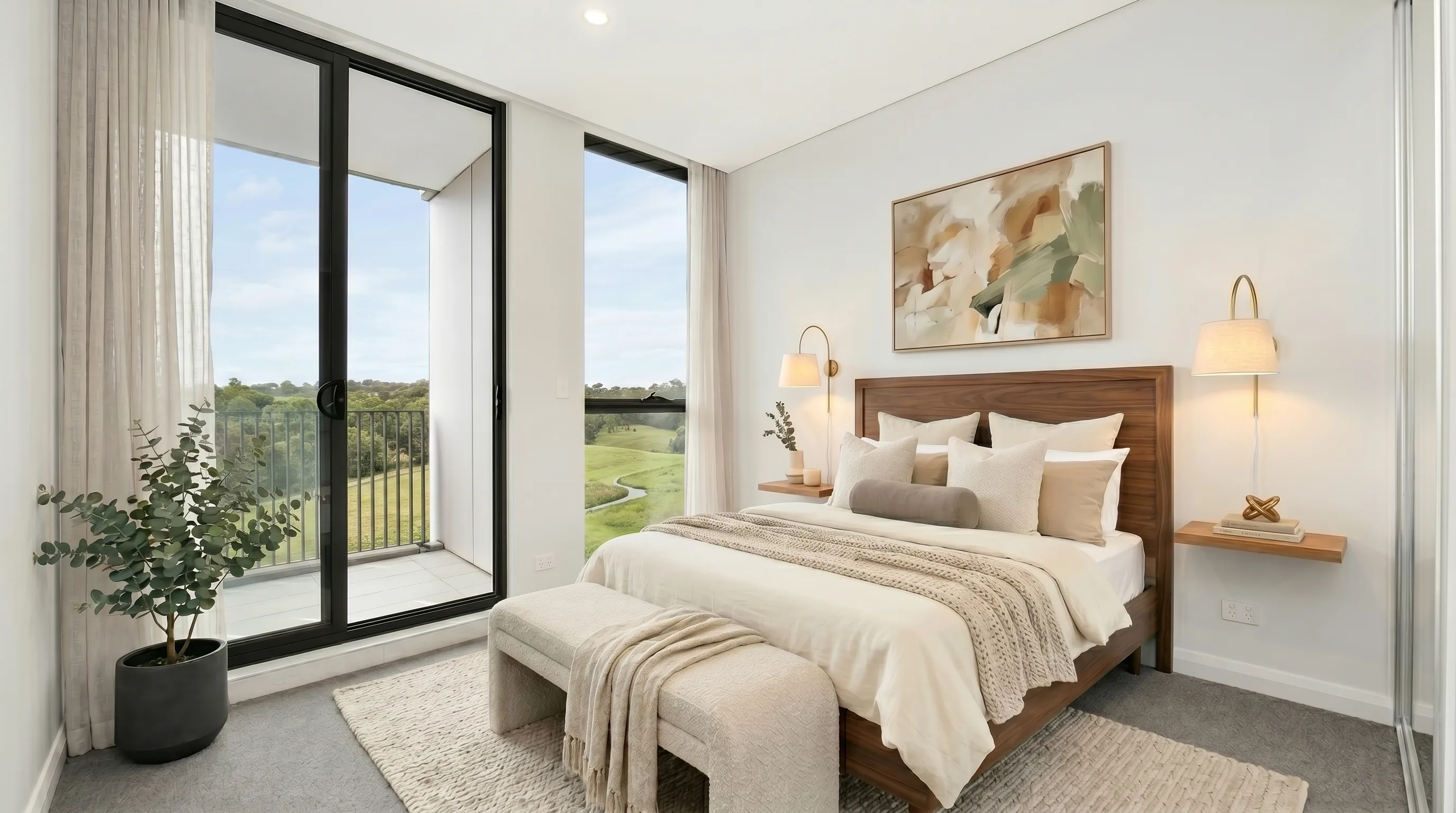
Motion does the emotional work. A slow reveal of the facade. A camera that steps onto the balcony. A living room that fills with afternoon light. These are the moments that make a buyer picture their own life in the home.
This is the same craft behind any good off the plan property video: built from the plans and renders you already have, then edited like a brand film. It communicates scale and flow in seconds. It travels well on a phone. And for an interstate or overseas buyer who will never visit the display suite, the film may be the entire experience of the home.
It also carries the neighbourhood, not just the apartment. A short sequence of the parkland, the station, or the cafe strip sells the lifestyle around the building. For many buyers, that context matters as much as the kitchen bench.
It also builds consistency. When the film, the stills, and the website all share one visual language, the project feels considered. Buyers read that polish as confidence. A launch that looks coherent across every channel signals a developer who has their act together, and that reassurance matters when someone is buying off a plan rather than a finished home.
How to market off the plan apartments through a launch
A film is not a single post. The developments that get real value from it plan the whole launch around it. I think of it in three stages, and one production can feed all of them.
First, the teaser. Before the full launch, a short cut builds a waitlist and warms the database. It says something is coming without giving everything away. Second, the launch itself. The hero film anchors the campaign, on the portal, in the display suite, and in the first emails. This is the window that matters most, when interest peaks and the best stock is still available.
Third, the sales period. As stock moves, shorter cuts keep the campaign alive. A different apartment type. A new angle on the amenity. A lifestyle reel for social. To market off the plan apartments well over months, you release deliberately, not all at once. One considered production, paced out, does far more than a single clip posted and forgotten.
A channel-by-channel plan
The mistake is treating a film as one deliverable. One production can be cut for every place a buyer looks. Plan the cuts before you start, and the same footage does far more work.
- Portal listings — a sixty-to-ninety second walkthrough on the major sites like realestate.com.au and Domain, where video holds attention longer than photos.
- Social and reels — fifteen-second vertical cuts that lead with the strongest room and a single hook.
- The display suite — a silent loop on the screen, so the space sells even when the agent is busy.
- Email and investor decks — the full film, sent to your database and to overseas buyers who cannot visit.
- Paid social and search — a punchy cut as the creative, so the ad shows the home rather than a logo.
None of this needs the building to exist. It scales, too. One visual language can cover every apartment type in the project, not just the display unit. Plan those outputs up front and they cost nothing extra to produce.
One caution: match the length to the channel. A ninety-second walkthrough belongs on the portal, not on a reel. A fifteen-second cut belongs on social, not in the investor deck. The same footage, cut to the right length for each place, always beats a single long film pasted everywhere and hoping for the best.
What to actually show
Lead with the hero space. Usually that is the living area and the view. Then move through the kitchen and the main bedroom. Land on a lifestyle note that fits the buyer. A downsizer wants calm and light. An investor wants a home that will lease.
Match the styling to the target, not to a trend. The furniture, the palette, and the mood all signal who the home is for. Get that wrong and even a beautiful film speaks to the wrong buyer. Get it right and the apartment feels made for the person watching.
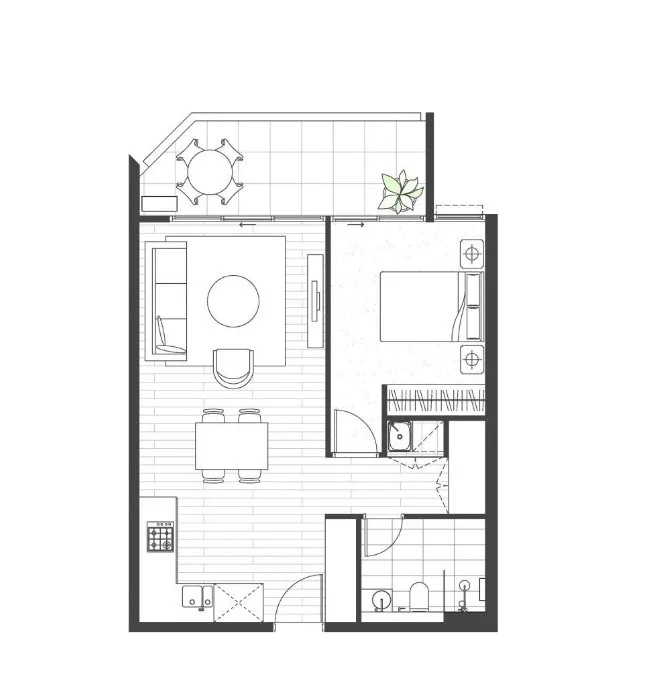
Do not skip the plan. Buyers still want to understand the layout, so a clean floor plan sequence earns its place in the edit. It answers the practical question the mood shots do not. You can see how these pieces come together in the work I have made, from full launches to floor-plan-to-render sequences.
Marketing a launch soon? Start a free pilot → — one apartment, one finished video, no cost.
What it costs and how fast
The cost drivers differ from a traditional shoot, and they are usually lower. There is no crew, no location, and no travel. There is no wait for the building. Price tracks the number of scenes, the level of finish, and the revision rounds. A single hero film sits at one end. A full suite across apartment types sits at the other.
Lower cost does not mean lower quality. The savings come from skipping the shoot, not from cutting the edit. The grade, the sound, and the pacing are where the time still goes. That is the part a buyer actually feels. Timelines are short as well. With no shoot to schedule, most single pieces land within one to two weeks. Revisions drive the calendar, not logistics. The table compares the two approaches.
| Aspect | Traditional shoot | Off-the-plan AI video |
|---|---|---|
| When you can start | After completion and styling | From plans and renders, pre-construction |
| Turnaround | Weeks | Days to two weeks |
| Empty or unbuilt spaces | Needs staging | Built from drawings, furnished virtually |
| Cost drivers | Crew, gear, travel | Scenes, finish, revisions |
| Best for | Finished listings | Off-the-plan launches |
Common mistakes to avoid
A few things quietly undercut an off-the-plan campaign. The first is one long film and nothing else. If you do not cut it for social and the portal, most of the audience never sees it. The second is styling for everyone. A home dressed to please every buyer connects with none.
The third is overselling. A view that will not exist, or a ceiling that is taller on screen than on the plan, reads as impressive until handover. Then it reads as a problem. The fourth is leaving feedback to a committee. Scattered notes from five people are the most common cause of a blown timeline. Nominate one person to consolidate them.
The last mistake is waiting too long. Some developers hold the film back until the building is nearly finished. Then they wonder why the launch felt quiet. The whole advantage of this format is that it works before construction. Use it early, in the window when demand and available stock are both at their peak. A film that arrives after the best apartments are gone has missed its moment.
Who benefits most from off-the-plan video
Off-the-plan video is not for every listing, but a few situations make it obvious. It earns its place when the timing and the buyer line up. In practice, that means:
- the apartment is off the plan, or finished but still empty and hard to photograph;
- the launch window matters and you cannot wait months for construction to finish;
- the buyer pool is wide — interstate, overseas, or investor-heavy — and many will never visit;
- you are selling several apartment types and want one consistent look across all of them.
If a display apartment is already built, styled, and genuinely photogenic, a traditional shoot may serve that one unit better. I will say so when that is the case. The film is a tool, not a religion, and part of my job is telling you when a simpler option wins.
Measuring what actually works
Video is easy to admire and hard to justify unless you measure it. Keep it simple. Put a tracking link on each cut, so you can see which one drives enquiries. Then compare the social reel, the portal walkthrough, and the email film across the first month of the campaign.
The results usually surprise people. A short social cut often wins on raw reach. The full walkthrough converts the serious buyers who are close to a decision. You do not need every cut to be perfect. You need to know which one is doing which job. That way the next release, and the next project, spends where it actually counts.
Where video is not the answer
An honest guide names the limits. Video sells the feeling, but it does not replace a good sales team or a fair price. It will not rescue a project that is priced wrong for its market. And it cannot promise something the contract does not.
Accuracy matters most here. A film that oversells a view or a ceiling height is a compliance risk, not a clever tactic. There is a trust cost too. A buyer who feels misled at handover will talk, and in a small market that travels fast. So I treat accuracy as part of the marketing, not a hurdle to it.
Used honestly, though, the format is hard to beat for a launch. It reaches more buyers, earlier, for less. It just cannot do the sales team's job for them. The best results come when a strong film sits inside a well-run campaign, priced right and followed up properly. The video opens the door. People still have to walk through it.
How I would start
You need less than you might think. Gather the floor plans, any renders or finishes boards, and a clear idea of the buyer. Decide where the film will run, because that shapes the cut. Then keep the feedback with one person, so revisions stay focused.
That is genuinely the whole brief. When you market off the plan apartments this way, the hard part is not the production. It is deciding who the home is for and staying honest about what it is. If you want to see the result on your own stock before committing, that is what a pilot is for. You can read more about how I work on the property films and visualisation page, or just send through a project and I will show you rather than tell you.
Frequently asked questions
- How do you market an off the plan apartment before it is built?
- You build the marketing from what already exists — floor plans, renders, and finishes — and turn it into video and stills. That lets you run a full campaign across portals, social, and the display suite while the site is still under construction.
- Is a video better than renders for off-the-plan?
- Renders and video do different jobs. Renders show a room; video shows a life in it. Motion holds attention longer and communicates scale and flow in seconds, which is why it tends to lead a launch while renders support it.
- How much does an off-the-plan marketing video cost?
- It depends on scope — the number of scenes, the level of finish, and the revision rounds. Because there is no crew, location, or travel, it is usually more affordable than a traditional shoot, and a single hero film sits at the lower end.
- How long does it take to produce?
- Most single pieces are delivered within one to two weeks. There is no shoot to schedule, so the timeline is driven by revisions rather than logistics.
- Can the video show apartments that are not chosen yet?
- Yes. The film is built to the approved plans and finishes schedule. Where a finish is not locked, it is flagged rather than guessed, so the marketing stays accurate to what buyers are actually purchasing.
Planning a property video?
We run a free pilot for a small number of Sydney developers and agencies each month — one property, one finished AI-powered video, no cost.