Virtual staging · 4 Aug 2026
AI Virtual Staging for Empty Sydney Apartments Guide
Oracreative · Updated 20 July 2026
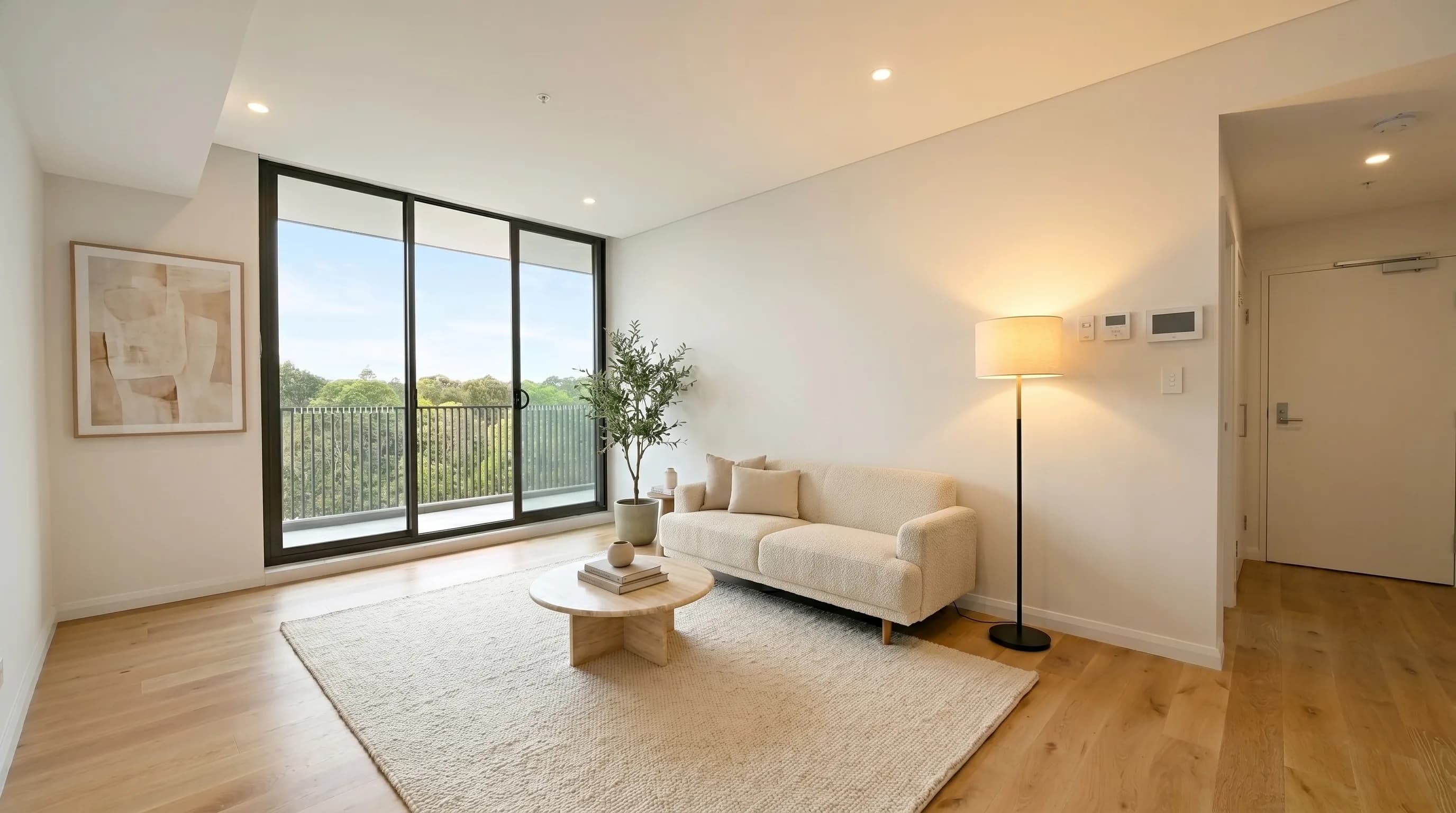
An empty apartment is a hard thing to sell. Buyers walk in, see bare floors, and cannot picture their life in the space. AI virtual staging fixes that. It furnishes an empty room digitally, adding sofas, rugs, and a dressed bed, so a listing photo feels like a home instead of a shell. No removalists. No rented furniture. No styling crew waiting on a delivery van. It is the same room, shown at its best.
I have spent about three years making video and images, and these days I build them with AI. I run Oracreative, a small Sydney studio, and I have made every piece in our portfolio myself. My first real property job actually began as a favour I turned down. An agent asked me to film an apartment. I said no, at first. I would not touch the developer's renders until the developer had signed off on the copyright I would be building from. Once that was clear, I made the film for free. That is the honest origin of how I work: rights first, then the pretty pictures. So I will be straight about what virtual staging does well and where it falls short.
What AI virtual staging actually is
Virtual staging is a simple idea with a lot of craft underneath. You start with a photo of an empty room. The software understands the geometry: where the floor stops, where the walls meet, how the light falls from the window. Then it places furniture into that space so the scale, shadows, and perspective look real. A sofa sits flat on the floor. A rug tucks under it. A lamp throws a warm pool of light in the right direction.
People confuse it with two other things. The first is a mood board, where furniture is pasted on with no respect for perspective. That looks fake, and buyers spot it instantly. The second is a full 3D render built from scratch, which is slower and pricier. Good virtual staging sits between them. It keeps the real room, the real windows, the real view, and only adds what was missing. It is the same discipline I bring to every AI property video I make, just applied to a still frame.
The output is usually a set of stills for the listing. It can also feed a short walkthrough clip, where the staged furniture holds up as the camera drifts across the room. The goal is never to trick anyone. It is to answer the question a buyer is silently asking: could I live here?
Why an empty room costs you buyers
Most people cannot read an empty room. They look at bare boards and blank walls and feel nothing. Worse, an empty room exaggerates its own flaws. A small bedroom looks like a box. A slightly odd wall angle becomes the only thing the eye lands on. Scale disappears, because there is no sofa or bed to measure the space against.
Staging fills that gap. It gives the eye a job. A dining table tells you six people fit. A made bed tells you this is the main room. On portals like realestate.com.au and Domain, the first photo decides whether anyone clicks at all. Buyers scroll fast. A warm, furnished hero shot stops the thumb. An empty grey room gets skipped, no matter how good the apartment is behind it.
This matters most for stock that is genuinely empty. New off-the-plan releases. Investor apartments between tenants. Deceased estates. Anything where a physical stylist would cost thousands and take a week to install and remove. Those are exactly the listings where a digital fill pays for itself in a single extra inspection.
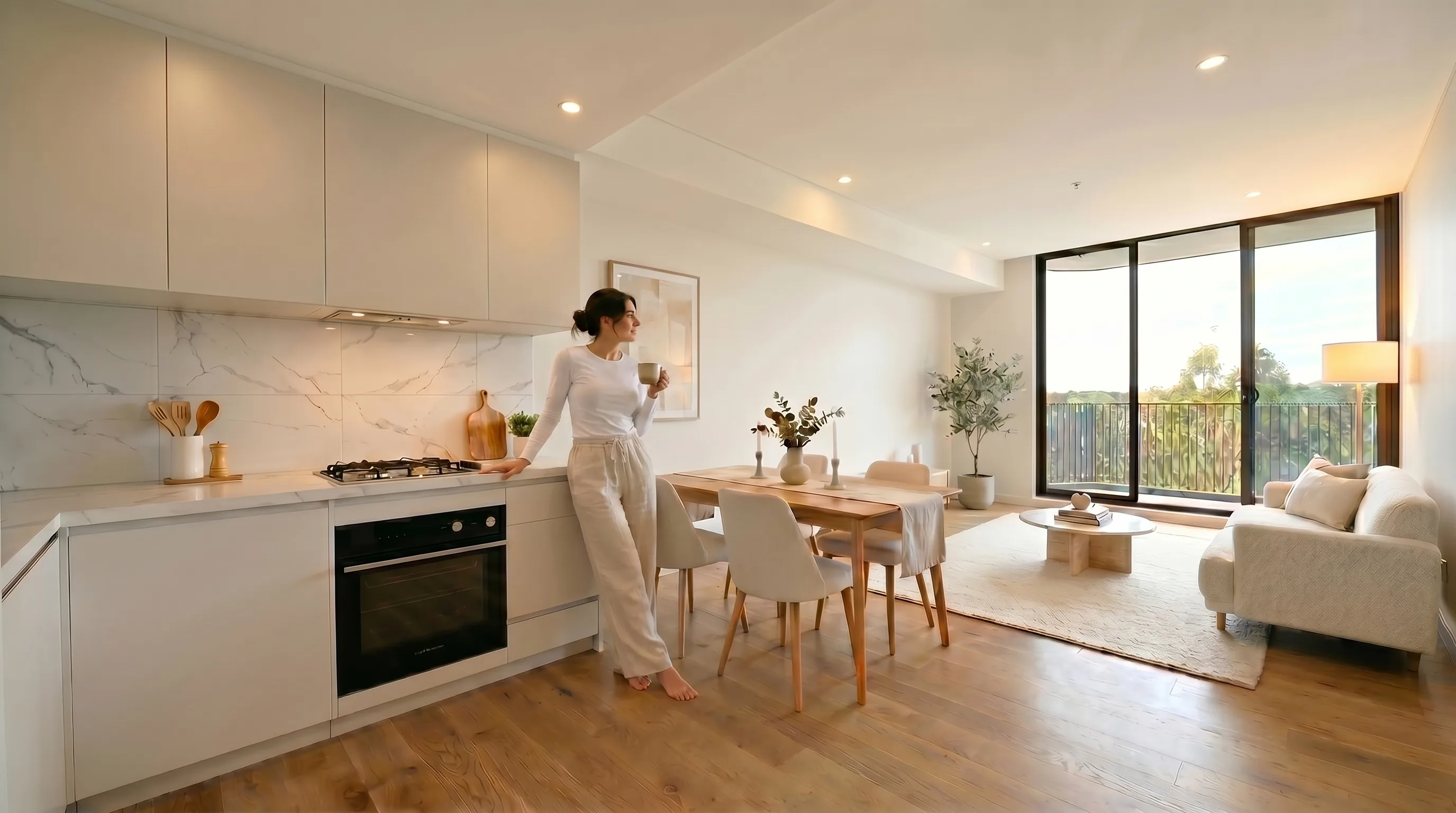
How I approach AI virtual staging, step by step
My process is not magic. It is a checklist run with care. Here is roughly how a room goes from bare to buyer-ready.
First, the source photo. I want it straight, well lit, and shot at a sensible height. A crooked or overexposed photo fights the staging at every step. Garbage in, garbage out, as always. If the agent can only give me a phone snap, I say so, and I set expectations.
Second, the read. I map the room before I add a thing. Where does traffic flow? Where is the natural focal point? A living room wants the sofa facing the view, not blocking the balcony door. Getting this wrong is what makes staging feel off, even when the furniture itself looks fine.
Third, the fill. I choose a style that suits the building and the likely buyer. A harbourside two-bedder gets calm, coastal, mid-tone furniture. A young-professional studio gets something sharper. I keep it restrained. Over-styling is a real temptation and a real mistake, because clutter shrinks a room on camera.
Fourth, the check. I look hard at shadows, reflections, and scale. Does the rug sit under the sofa or float above it? Does the light match the window? This last pass is where virtual staging either earns trust or loses it. I would rather ship one honest room than four that feel plastic.
Virtual staging versus a physical stylist
I am not here to tell you physical staging is dead. A styled display suite, walked through in person, is still powerful. But for a photo-led, online-first sale, the maths is hard to ignore. Here is how the three common options compare.
| Factor | Empty listing | Physical staging | Virtual staging |
|---|---|---|---|
| Typical cost | None | Thousands per property | A fraction of that, per room |
| Turnaround | Immediate | One to two weeks | Days |
| Furniture logistics | None | Delivery, install, removal | None |
| Flexibility | Fixed | Hard to restyle | Restyle in a new pass |
| Best for | Rarely ideal | Premium in-person sales | Empty stock, online-first buyers |
| Disclosure needed | No | Usually not | Yes, always label it |
The honest read: physical staging wins when buyers will physically stand in the room and touch it. Virtual staging wins when the sale happens through a screen first, which is now most sales. Many listings use both, physical in the display suite, virtual for the empty apartments on the same floor.
Selling an empty apartment and not sure it is photographing well? I run free pilots for a small number of Sydney agents and developers. Start a free pilot →
What it costs and how fast it moves
Virtual staging is priced per image, not per project, which is what keeps it cheap. You are paying for a room, or a handful of rooms, rather than a truck of furniture and two days of labour. Because there is no physical install, the turnaround is measured in days. For a launch on a tight deadline, that speed is often the real value, not just the saving.
Scope is where budgets drift. You do not need every room staged. The hero shot, the main living space, and the primary bedroom carry most of the weight. Staging a laundry or a hallway rarely earns its keep. I usually suggest starting with the three rooms that decide the click, then adding more only if the listing needs it.
If you want to see the range of finished work behind this, the honest, self-made pieces live in our portfolio. Everything there was produced in-house, so you can judge the actual bar before you brief anything.
Which rooms are worth staging first
Not every room deserves the budget, and spreading it thin is a common way to waste it. A listing is won or lost on a handful of images, so I put the effort there. The hero shot comes first. On a portal that is the single photo a buyer sees before deciding to click, so it has to carry the whole apartment in one frame. Usually that is the main open-plan living and dining space.
The primary bedroom is next. Buyers want to know the biggest bedroom feels restful and fits a real bed with room to spare. A dressed bed, a bedside lamp, and a bit of texture do most of that work. After those two, a second living zone or a study nook can be worth it, especially where the floor plan is unusual and a photo helps explain how the space is meant to be used.
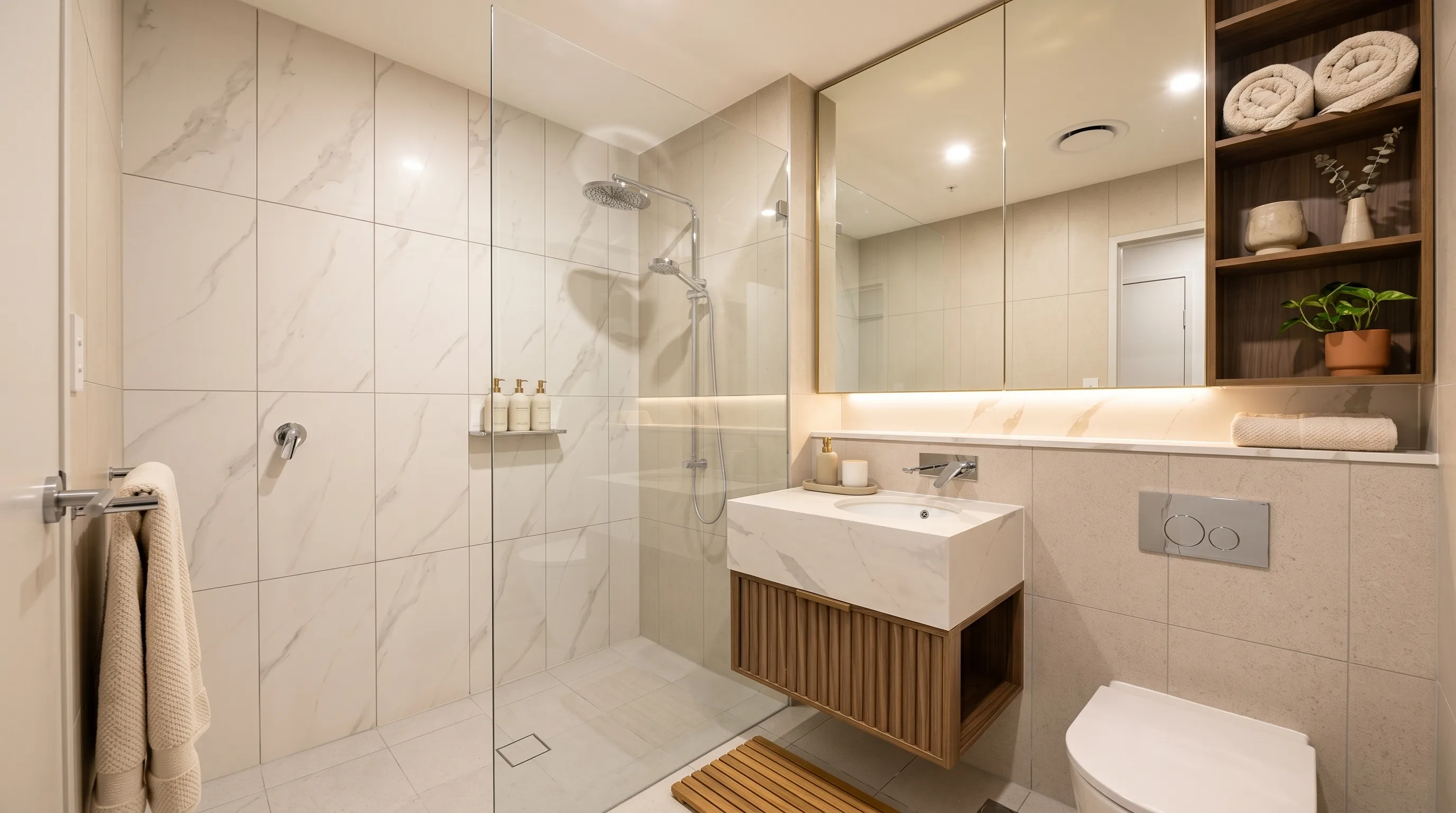
What I rarely stage is the laundry, the hallway, or a bathroom that already photographs well empty. Those rooms sell on being clean and functional, not on styling. Spending on them takes money away from the shots that actually move a buyer. Start with three rooms. Add more only when the listing genuinely needs it.
How to brief a staging job well
A good brief saves everyone time and gets a better result. The first thing I ask for is the best possible source photos: straight, bright, and shot from a normal standing height. If the room is dark, open the blinds and turn the lights on before shooting. A clean input is worth more than any amount of clever work afterwards.
Next, tell me who the buyer is. A downsizer wants calm and comfort. A first-home buyer wants something fresh and aspirational. An investor wants a space that reads as easy to rent. The furniture style should follow the buyer, not the stylist's taste. When I know the audience, I can pick a palette that feels like their future home rather than a generic showroom.
Then agree the scope and the rights up front. Which rooms, how many images, and who owns the finished files. I learned to put rights first the hard way, and I now settle copyright before I build anything. Finally, flag anything that must stay accurate: a real view, a real finish, a real fixture. Those are the guardrails, and a clear brief means nobody has to guess where the honest line sits.
Common mistakes that make staging look fake
Bad staging is easy to spot, and buyers are better at spotting it than agents assume. The most common error is scale. Furniture that is slightly too big or too small breaks the illusion instantly, because the eye reads the room against everyday objects it already knows. A sofa that dwarfs the wall behind it screams edited.
The second is light. If the room is lit from a window on the left, every shadow in the added furniture has to fall to the right. When the software gets this wrong, the furniture looks pasted on, like a sticker floating above the floor. Catching it takes a careful eye and a willingness to redo the pass. The third is clutter. Over-styling with too many cushions, vases, and trinkets makes a room feel smaller and busier, which is the opposite of what you want on camera.
The last mistake is the worst, because it is a trust problem rather than a craft one: staging that hides something. Furniture placed to block an awkward column, or props arranged to distract from damage. Buyers find out the moment they walk in, and the listing loses them for good. Keep it clean, keep it believable, and let the real room show through.
Where AI virtual staging has limits
This is the section most sales pages skip, so I will lean into it. AI virtual staging is a marketing tool, not a renovation. It cannot fix a genuinely bad room, and it should never pretend to.
The biggest rule is disclosure. Staged images must be labelled as digitally staged, and they must not misrepresent the property. You cannot erase a support column, hide water damage, straighten a crooked wall, or invent a view that is not there. In Australia, misleading a buyer this way is both an ethics problem and a legal one. My own line is simple: I add furniture that could really fit, and I change nothing about the building itself.
There are technical limits too. Tricky reflections, glass, and mirrors are still hard to fake cleanly. Complex lighting can defeat the software, so a heavily backlit room may need a manual pass. And staging cannot invent space. If a bedroom is small, honest staging shows it small, just warm and liveable rather than bleak and bare. For a fuller look at building believable spaces from scratch, I wrote a companion piece on the off the plan property video process, where the same accuracy rules apply.
The last limit is taste. The software will happily produce a technically correct room that feels like a showroom nobody lives in. Avoiding that is a human job. It takes an eye, restraint, and a sense of who the buyer actually is.
Our take
I like virtual staging because it is honest about what it is. It does not claim to be the real furniture. It claims to help a buyer imagine theirs. Used that way, it is one of the highest-return moves in property marketing: a small cost, a fast turnaround, and a listing that finally looks like somewhere you could live.
Used badly, it is a trap. Over-styled, undisclosed, or covering up a flaw, it burns trust the moment a buyer walks in and sees the truth. So I keep it plain. Real room, believable furniture, always labelled. If that sounds like the standard you want to hold, that is exactly the standard I work to, and it is why I would rather do one room right than ten rooms fast.
Frequently asked questions
- What is AI virtual staging?
- It is a technique that furnishes a photo of an empty room in software. Sofas, rugs, beds, and lighting are added so the scale, shadows, and perspective look real, turning a bare listing photo into one that feels like a lived-in home.
- Is virtual staging legal, and do I have to disclose it?
- Yes it is legal, but you must disclose it. Staged images should be clearly labelled as digitally staged, and they must not misrepresent the property. You cannot hide a defect, remove a structural feature, or invent a view. Misleading a buyer this way is an ethics and a legal problem in Australia.
- How much does virtual staging cost compared with physical staging?
- It is priced per image rather than per project, so it typically costs a fraction of physical styling. Physical staging runs to thousands per property with delivery and removal, while a digital fill covers only the rooms you choose, with no furniture logistics.
- How long does it take to stage a listing?
- Because there is no physical install, turnaround is usually measured in days, not weeks. Most listings only need the hero shot, the main living space, and the primary bedroom, which keeps both the cost and the timeline down.
- Who owns the copyright of the staged images?
- Rights should be agreed before any work starts. When source renders or plans come from a developer, I confirm the copyright is cleared before I build anything from them. Get the ownership of the finished images written down so everyone knows who can use them and where.
Planning a property video?
We run a free pilot for a small number of Sydney developers and agencies each month — one property, one finished AI-powered video, no cost.