Virtual staging · 19 Aug 2026
Virtually Stage a Property: One Empty Room, Start to Finish
Oracreative · Updated 22 July 2026
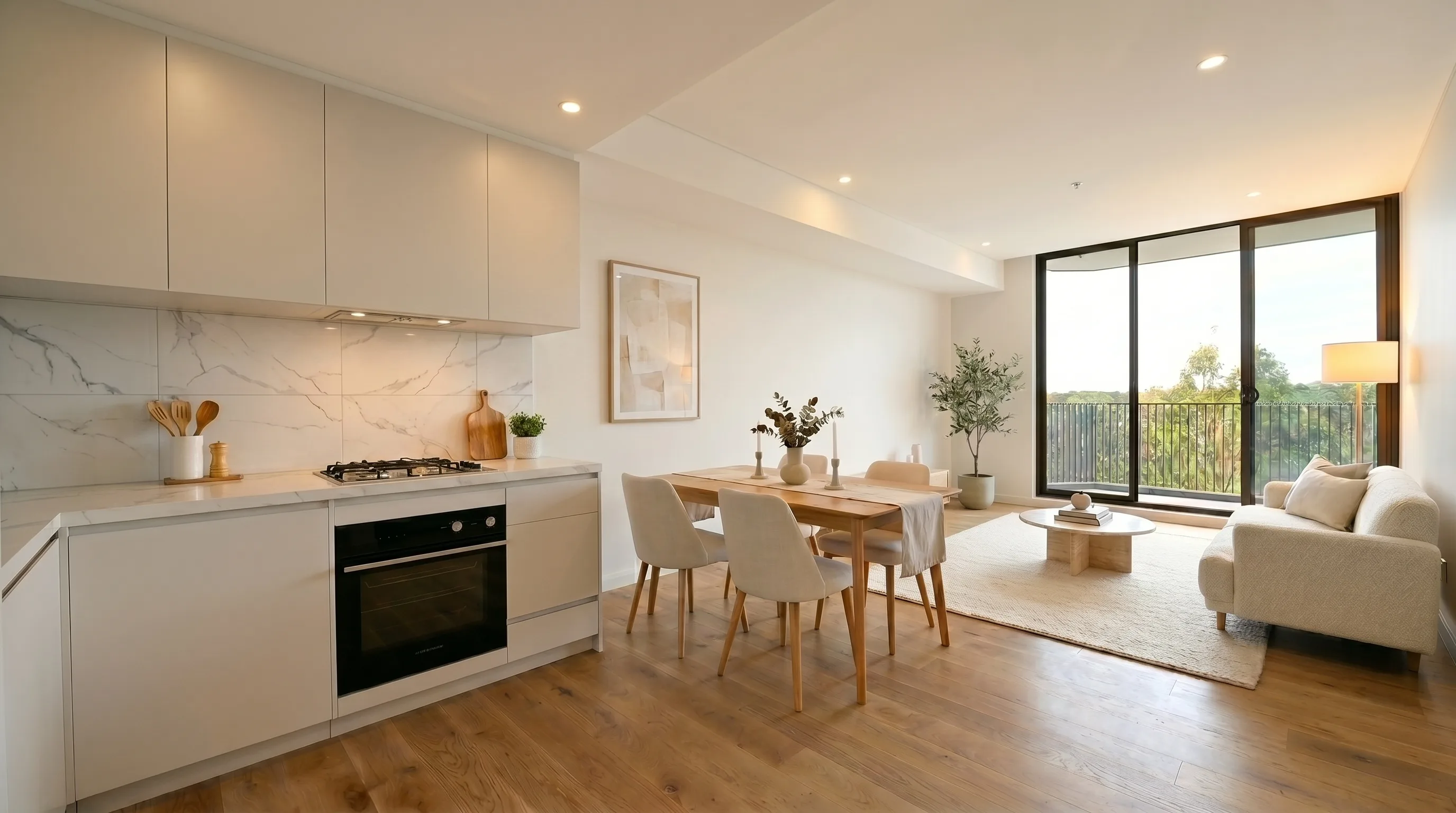
An empty open-plan render landed on my desk with nothing in it. Bare floors, one long window, a kitchen bench, and a wide stretch of blank space where a home should be. A room like that is hard to sell, because a buyer's eye has nothing to hold on to. So I set out to virtually stage a property from that single frame, and turn a cold shell into a space someone could picture living in.
I have spent about three years making video and images, and homes are the subject I keep coming back to. Every piece in my portfolio is made by me, start to finish. I am not going to invent a wall of client logos I do not have. Instead, this is a case study of one room I dressed myself, as a self-initiated concept. I will walk you through the real decisions, in the order I made them, using the frames on this page.
The empty render I set out to stage
The starting point was a plain open-plan shell. One space held the kitchen, a dining zone, and a living area, with a single run of windows down one side. It was clean but lifeless. There was no sense of scale, no warmth, and no clue about how a person would actually use it.
If you want the plain-language version of what this technique is and where it fits, I wrote a full explainer on AI virtual staging that covers the ground rules. This piece is narrower on purpose. It is the behind-the-scenes of one job, not a definition. My goal here was simple: make the empty frame feel like a home a buyer would stop scrolling for.
That scroll is the whole battle. On a portal like realestate.com.au, the first thumbnail decides whether anyone clicks a listing at all. An empty living room reads as small and cold in that little square. A dressed one reads as a place with a life in it. The gap between those two images is the entire job, and it is why I started with the hero shot rather than a side room.
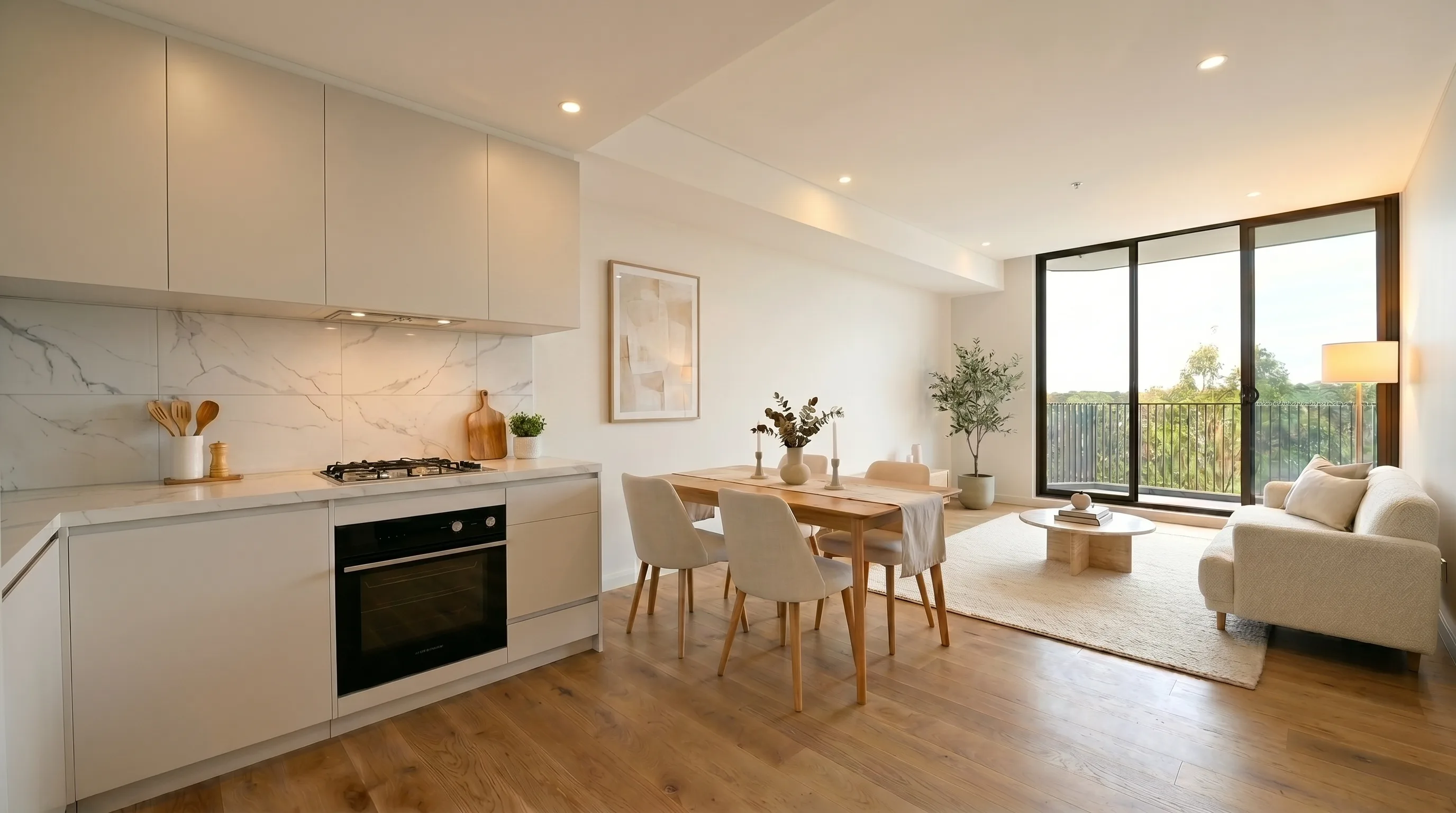
Reading the room before I added a thing
The temptation with AI is to type a prompt and grab the first pretty result. I did the opposite. Before I placed a single object, I spent time just reading the space. That reading is where a staging is won or lost, and it takes minutes that save hours later.
I looked at the light first. The windows ran along one wall, so the room would fill from the side, not the front. That told me where a sofa could sit without fighting the glare, and where a lamp would need to carry a darker corner. Light is the mood of a room. Get it wrong and the furniture never looks like it belongs.
Then I read the scale. I checked the ceiling height and the width of the walls against the kitchen bench, which I knew the real size of. That gave me a rough ruler for everything else. A three-seater sofa in a narrow room is a lie, and a good eye catches it in a second. So I decided early that this space wanted one generous sofa and a compact dining set, not a showroom's worth of pieces.
Last, I pictured the buyer. This felt like a downsizer's apartment, or a first home for a couple. Not a share house, not a family of five. That single guess shaped the palette and the furniture more than any other choice. I dress a room for the person most likely to buy it, never for my own taste.
None of that reading is glamorous, and none of it involves the AI at all. It is a pen, a plan, and a few minutes of looking. But it is the foundation everything else sits on. Skip it, and you spend the rest of the job fighting a room you never understood. Every time I virtually stage a property, this quiet first pass is where the result is really decided.
How I virtually stage a property, one frame at a time
With the room read, the placing was fast. This is the part where AI genuinely earns its keep. I could try three or four furniture looks in the time physical staging needs to book a van. But I treated every generated result as a draft, not an answer. The table below is the decision log for this exact frame — what the empty render gave me, what I chose to add, and why.
| What the empty render gave me | What I added | Why |
|---|---|---|
| Long window wall, side light | Sofa set back from the glass, lamp in the far corner | Uses the daylight without fighting glare; lifts the dark end |
| Open kitchen, dining, living in one run | One rug per zone, a low bench between them | Splits the space into readable rooms without walls |
| Bare, wide floor | One generous sofa, a compact four-seat table | Proves the room holds real life, at honest scale |
| Cool, empty tone | Warm timber, a calm palette, two plants | Reads as a lived-in home, not a furniture advert |
| No focal point | One piece of art, placed off the sofa | Gives the eye a place to land and settle |
Notice how little of that is about the software. The tool put furniture in the room. The choices, the ruthless editing down to a few good pieces, and the reasons behind each one are the work. Fewer, better pieces beat a cluttered room every time. Two plants, not ten. One artwork, placed well. Space left to breathe.
The last decision was the one people skip. Before this frame goes anywhere, it gets labelled as a render, a staging concept. That single line keeps the marketing honest, and it keeps an agent out of trouble. I will come back to why that line is non-negotiable, even on a concept I made for myself.
Sitting on an empty listing that shows cold? Start a free pilot → — one room, staged and finished, no cost to you.
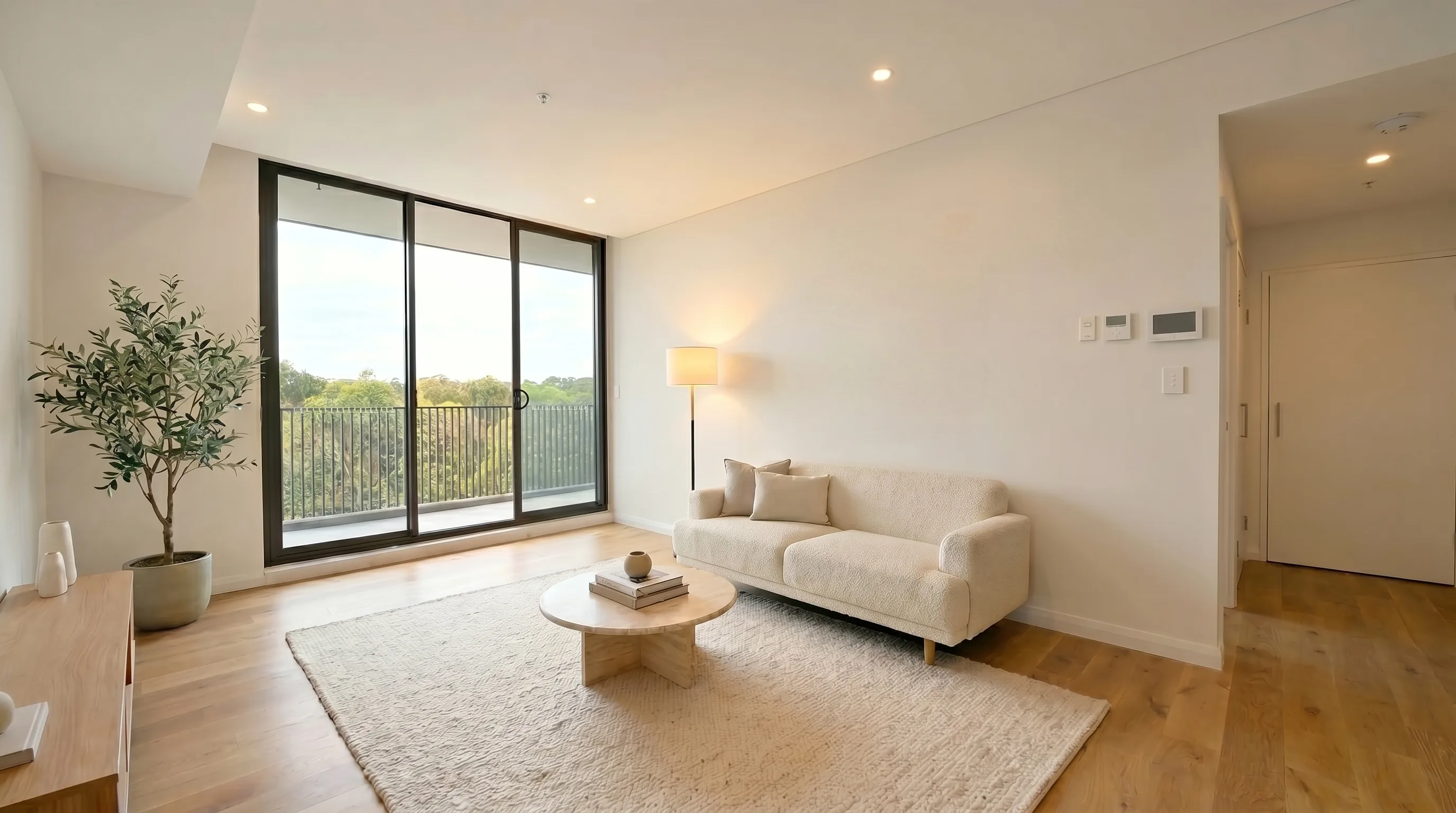
Where AI helped, and where I overruled it
People assume the AI does the hard part now. It does not. It does the fast part. The hard part is spotting the dozen small errors it makes and fixing them before anyone else sees them. That editing eye is the whole difference between a staging that sells and one that quietly looks wrong.
Scale is the thing I overruled most. AI loves to drop in furniture that is slightly too big, or a rug that stops short of the sofa. In this room, the first pass gave me a coffee table that swallowed the walkway. I pulled it smaller and gave the path back. Little fixes like that are what make an image read as real instead of generated.
Shadows came next. Furniture has to sit on the floor, not hover above it. Light from that side window had to land where physics says it would, not wherever the model felt like painting it. I nudged the render until the shadows agreed with the window. When those details are right, the brain relaxes and reads the room as true.
Materials were the third override. The first pass gave the timber a plastic sheen and made the rug look printed on. So I dialled the reflections down and let the surfaces read as real wood and real fabric. These are tiny corrections, and no single one is dramatic. Together they are the line between a room that feels lived-in and one that feels rendered.
You can see the range of what I have dressed this way across the work I have made, from single hero shots to whole apartments done end to end. The common thread is not the tool. It is the same eye applied every time: match the real space, cut the clutter, respect the light. That is the part three years builds, and it is the part no prompt can shortcut.
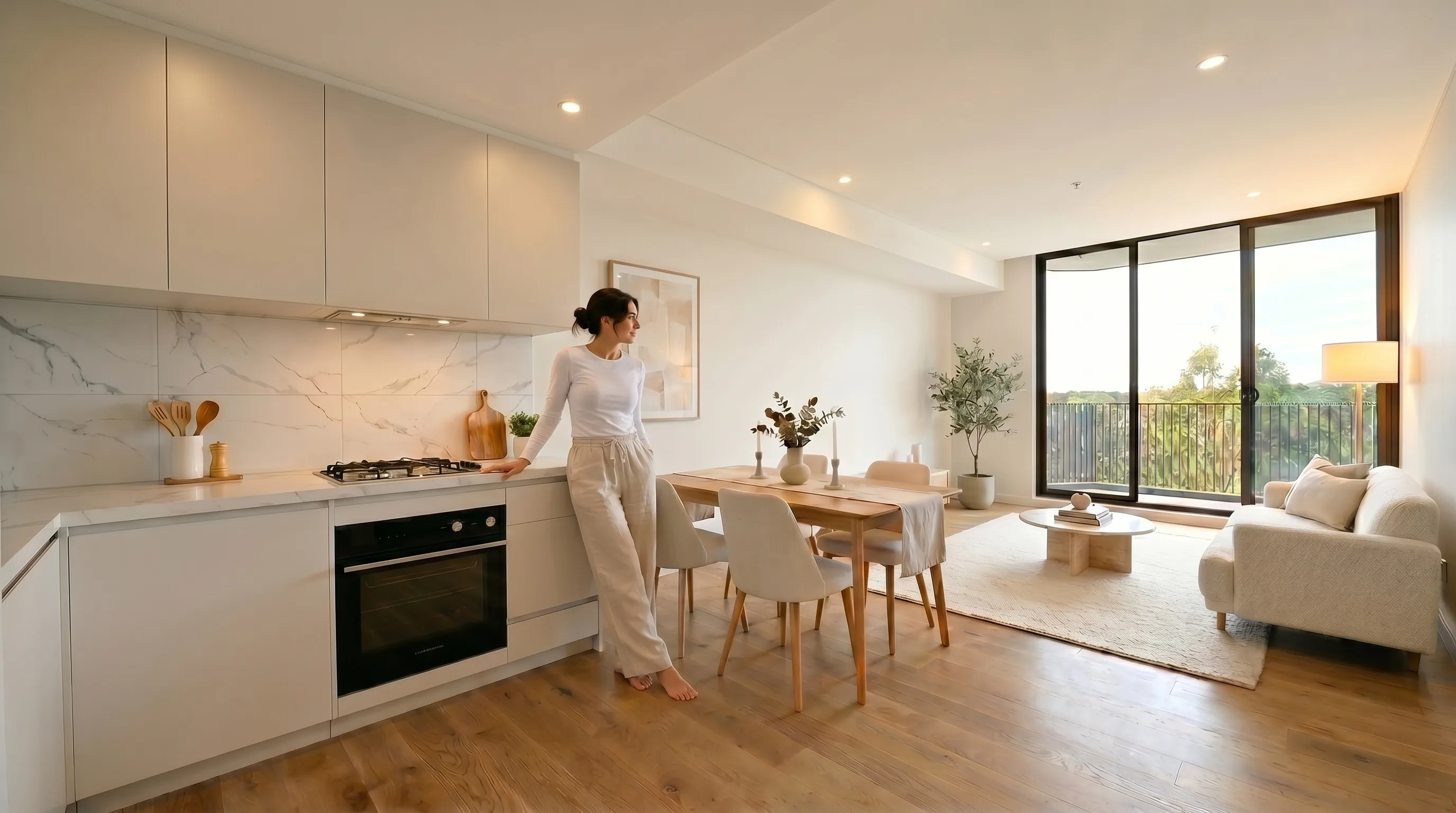
The honesty line, even on my own concept
An honest walkthrough names the trade-offs. Virtual staging is powerful, and that power cuts both ways. The same tool that warms an empty room can also oversell a space that is not really that big. So I hold a few hard lines, and I held them on this concept even though no client was watching.
First, disclosure. A staged image gets labelled as a render, a staging concept, or an artist's impression. I never present a virtual sofa as a real one. Portals and agents expect this now, and buyers deserve it. A buyer who feels tricked at the open home does not forget it, and in a small market that story travels fast.
Second, I do not change the architecture. Staging dresses a room. It does not knock out walls, widen the space, or paint over a real flaw. If a room is small, the furniture I add respects that. Hiding a genuine problem is not staging. It is a complaint waiting to happen.
Third, copyright, and this one is personal. An agent I know once asked me to make a property film. I said no at first, because the renders and photos these jobs lean on can be the developer's copyright. So I asked the agent to get the developer's approval before I built anything. Once that sign-off came back, I made the piece end to end, free of charge. The order matters. Rights first, work second. I bring the same rule to every room I stage, including this one.
What would change if this were your listing
This was a concept, so I had free rein. When I virtually stage a property for a real listing, a few things shift, and they all make the work better rather than harder. The first is that I would start from your actual photos or renders, not a stock shell. Real input beats an invented room every time, because the furniture then has to answer to a real space with real quirks.
I would also want less from you than you might think. Clear, level photos of the empty rooms. A sense of the buyer. The floor plan, so I can check what truly fits. Maybe a reference image if you have a look in mind. That is close to everything. What you do not need is a stylist, a furniture budget, or a spare weekend.
Then we would pick the rooms that matter. The living area and the main bedroom carry most listings. A dining zone earns its place when the plan is open. Kitchens and bathrooms rarely need it. Three strong rooms beat a whole apartment done flatly, and you can see plenty of empty listings on Domain that a little of this would lift. If you want the full service view, it sits inside my property media work, next to film and visualisation.
The pace is quick, too. Because nothing physical moves, a set of staged rooms comes back in days, not weeks. Revisions drive the calendar, not logistics. That speed is the practical reason agents reach for it during a launch window, when the best stock sells first.
What one room taught me
Staging this single frame reminded me why I like the craft. It is fast, it is cheap next to real furniture, and done well it genuinely helps a buyer see a home. I watched a cold, empty render turn into a room I would happily live in, in an afternoon. That is a real win, not a gimmick.
The other lesson was about trust. A staging only works if a buyer believes it, and belief is fragile. One oversized sofa, one shadow pointing the wrong way, and the whole image tips into feeling fake. So the restraint is not just a style choice. It is what keeps the picture credible enough to do its job at all.
But the tool is not the studio. The value is in the judgement around it: the scale check, the restraint, the honest label on the corner of the frame. Treat staging as a shortcut to lying about a space and it will bite you. Treat it as an honest way to show a home's potential and it earns a place in every listing kit.
So if you have an empty listing sitting cold on a portal, that is exactly the case this was built for. Send me one room → and I will show you what it could feel like — honestly, and at no cost for the first one.
Frequently asked questions
- What does it mean to virtually stage a property?
- It means furnishing an empty room in software instead of in real life. You start from a photo or render of the bare space, then add furniture, art, and light so buyers can picture living there. Nothing physical is delivered — the change happens on screen.
- Is AI virtual staging realistic enough for real listings?
- Yes, when it is done with care. The tools improved a lot in the last year, and a considered image holds up on a large screen. The realism comes from getting scale, shadows, and light right, which still takes a human eye — not from the tool alone.
- How much does virtual staging cost compared to physical staging?
- It is far cheaper. Physical staging means furniture rental, delivery, and often a monthly fee while the property is listed. Virtual staging has none of that — you pay for the images once, and they come back in days rather than weeks.
- Do I have to disclose that a photo is virtually staged?
- Yes, and you should. A staged image must be labelled as a render, staging concept, or artist's impression. Portals and buyers both expect it. Honest labelling protects the agent, the seller, and the buyer, and it is non-negotiable in my work.
- Who owns the copyright to the images used for staging?
- The source photos or renders are usually owned by the developer or the photographer. Before I stage anything, I make sure there is approval to use them — I have turned work down until that sign-off was in place. Rights first, work second.
Planning a property video?
We run a free pilot for a small number of Sydney developers and agencies each month — one property, one finished AI-powered video, no cost.